

Image

Science, Philosophy and Society Department
A philosophy department within the Faculty of Science, this entity develops reflections on the epistemological, ethical, social, political and cultural issues of science and technology.
Teaching by members of the department takes place mainly in the Faculties of Science and Medicine, and covers philosophy of science, epistemology, logic, philosophy of medicine, bioethics and social and political ethics. The aim is to initiate students to develop critical reflection on their scientific discipline and on the relationship between science and society.
1. Philosophy of science
2. Ethics of health care
3. Human development, social justice, interculturality
4. Philosophy of medicine
Are we prisoners of our genetic heritage? Can filiation be reduced to genes alone? Can we escape our destiny? Existential questions we all ask ourselves, and to which Gaëlle Pontarotti, lecturer and researcher in the Department of Sciences, Philosophies and Societies at UNamur, sheds new light in her book Par-delà les gènes. Une autre histoire de l'hérédité, published last October by Gallimard.
Until the end of the 20th century, heredity was seen by scientists as a matter of genes and DNA transmission. But in recent decades, research has revealed non-genetic transmissions, helping to explain why children on average resemble their parents more than other individuals in a population. These include epigenetic (changes in gene activity without changing the DNA sequence), microbial, hormonal and behavioral transmissions. Some biologists and philosophers now speak of "extended heredity".
"The challenge is to redraw the concept of heredity, going beyond the strictly genetic vision that has prevailed until now", explains Gaëlle Pontarotti. "The aim of my book and my research is to articulate different forms of transmission and to rethink the compatibility between heredity and transgenerational freedom."
For since Greek antiquity, everything suggests that we are locked into a family destiny. But if heredity goes beyond genes, what room for manoeuvre do we have? "The challenge is to find a happy medium between hereditary fatalism and the illusion of omnipotence in the face of our heritage", sums up the researcher.
This new concept overturns our vision of filiation and the status of the individual. We are no longer simply objects determined by causes beyond our control: we are once again actors in what we receive and transmit. It also invites us to reconsider the place of genes in filiation: is the parent fundamentally the one who transmits his or her genetic heritage?
And what if, ultimately, our heritage was also what we chose to make of it?
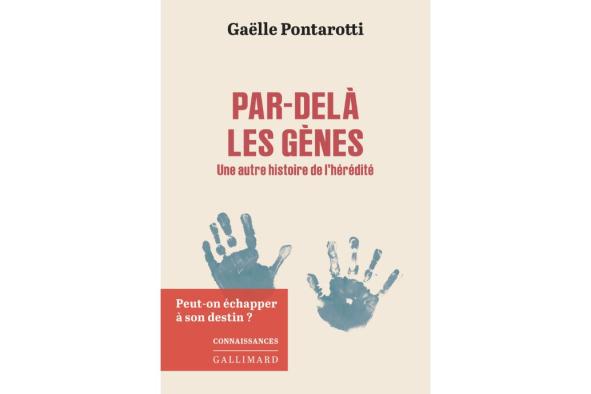
Cover credit: Éditions Gallimard, book visual Par-delà les gènes.
Par-delà les gènes. Une autre histoire de l'hérédité, by Gaëlle Pontarotti - Gallimard (collection Connaissances)
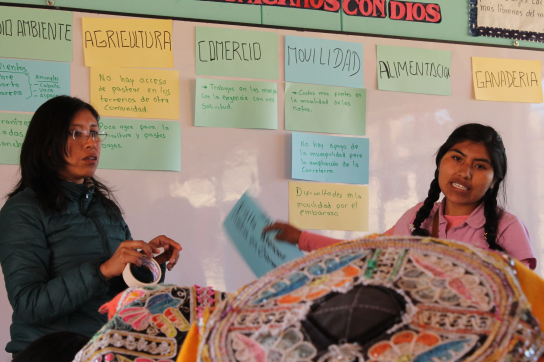
South America is a subcontinent rich in natural and cultural resources. Between biodiversity preservation and development cooperation, UNamur maintains valuable partnerships to address the challenges of biodiversity loss and understand current socio-economic transformations. Immersion in Ecuador and Peru.
Strategically located at the intersection of the Andes mountain range, the Amazon rainforest, and the Galápagos Islands (made famous by a certain Charles Darwin), Ecuador is a hotspot of biodiversity. More than 150 years after the naturalist's observations, this country remains a popular field of study for scientists investigating how wild organisms adapt to changes in their environment.
As part of a two-year project funded by the ARES International Cooperation Commission (ARES-CCI), Professors Frédéric Silvestre and Alice Dennis from the Environmental and Evolutionary Biology Research Unit (URBE) at UNamur have formed a partnership with the Universidad Central Del Ecuador. The goal? To apply the genetic and epigenetic techniques developed in the Namur laboratories to fish and macroinvertebrates in Ecuadorian streams.

"Genetic and epigenetic marks on genes provide valuable information about the environmental stresses experienced by wild populations."
An initial sampling campaign was conducted this summer, and another is planned for next spring, with Frédéric Silvestre and Alice Dennis participating. This collaboration also enabled URBE to welcome an Ecuadorian researcher who came to train in nanopore sequencing techniques, used in this project, and to carry out tests on samples of the species studied. Nanopore sequencing is a method of sequencing long DNA strands using an electrical signal. "This technique is very advantageous because it facilitates genome assembly and allows us to work on both the DNA sequence and its modifications. Nanopore sequencing also uses very small, portable equipment that is easy to use in the field," the researcher continues. The aim of using this technology is to demonstrate the feasibility of this process and, ultimately, to contribute to the development of more effective biodiversity conservation policies based on concrete genetic data.
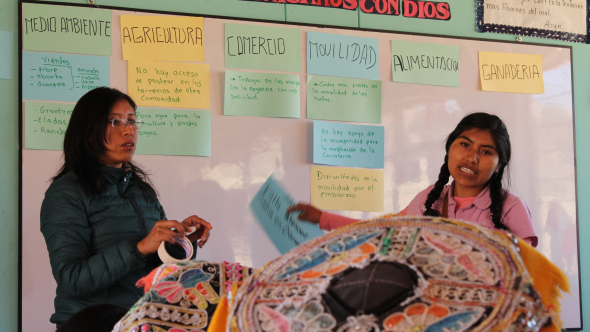
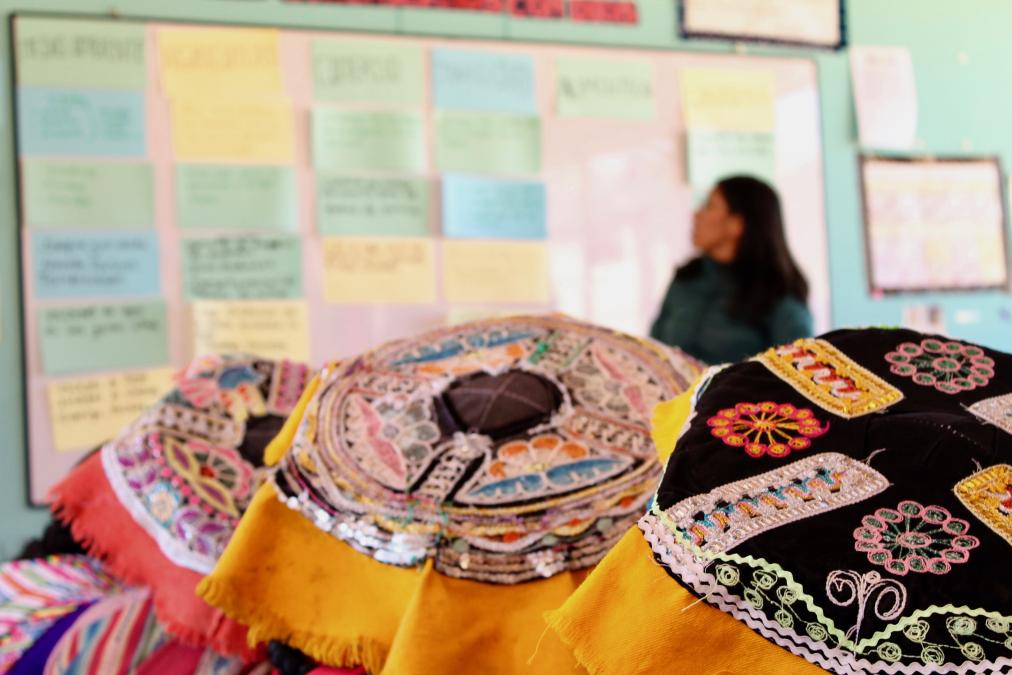
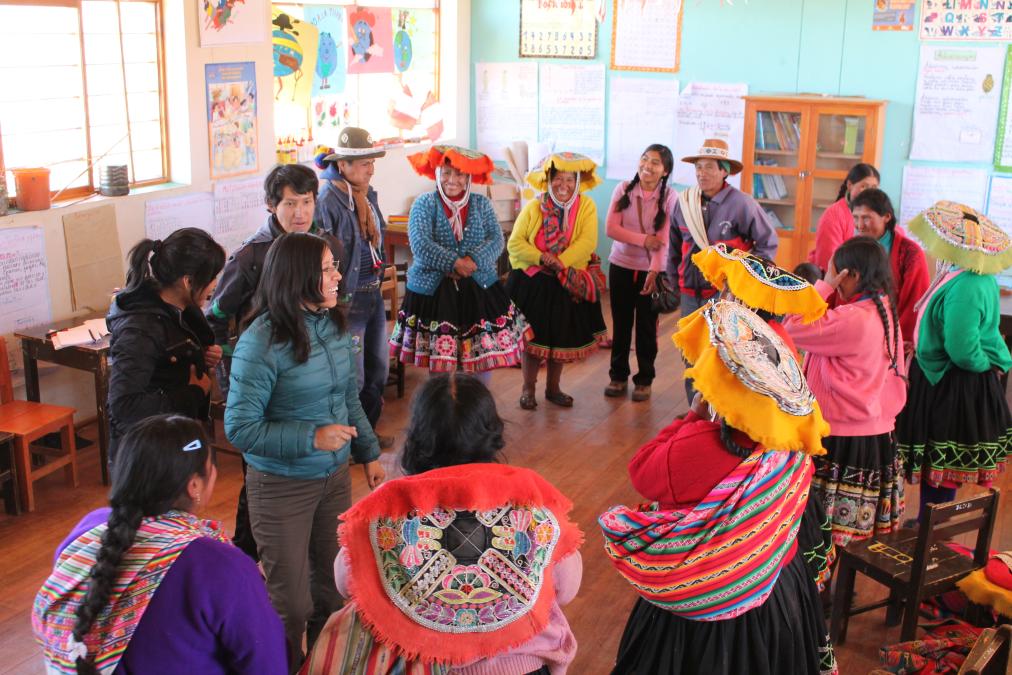
Newly appointed Vice-Rector for International and External Relations at UNamur, Stéphane Leyens is involved in no fewer than four projects in Peru, working closely with the Universidad Nacional San Antonio Abad del Cusco (UNSAAC). Located in the Andes mountain range at an altitude of nearly 3,500 meters, this university has been receiving support from the ARES International Cooperation Commission (ARES-CCI) since 2009 to improve the quality of its teaching and strengthen its research capabilities. These projects are set against the backdrop of the new "university law," which has profoundly changed the landscape of higher education by emphasizing teacher training and the social responsibility of universities, which are now encouraged to integrate issues such as interculturality, the environment, and gender into a local rural development perspective.
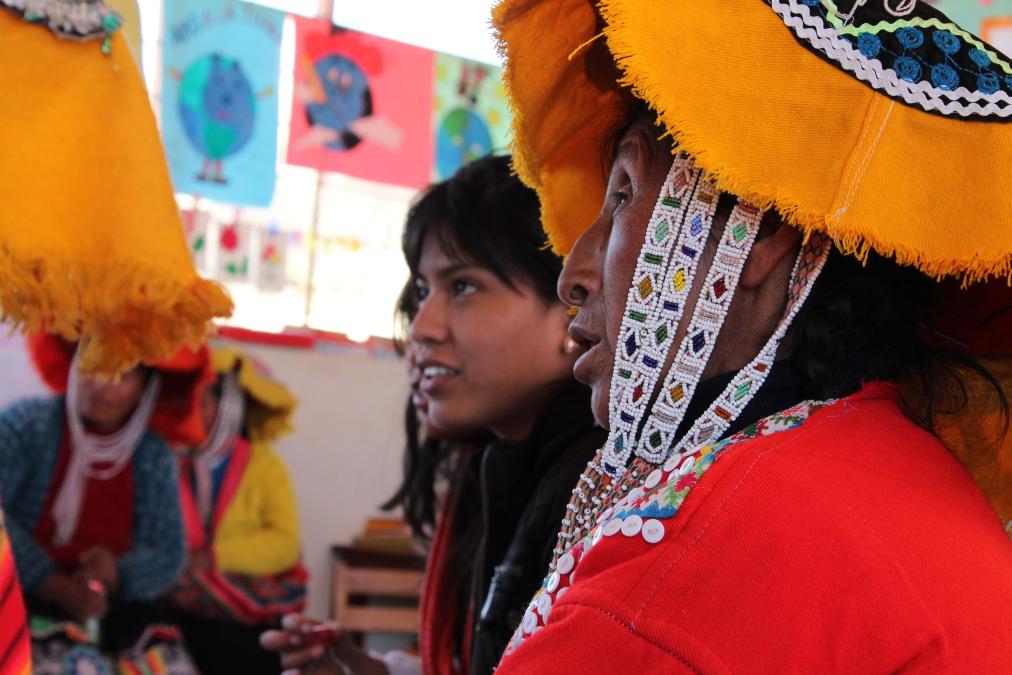
It must be said that the country's cultural, political, and socioeconomic context is undergoing profound change. As a result, rural communities are torn between their attachment to traditional lifestyles and the appeal of the economic opportunities offered by the modernization of agriculture or the growth of tourism.
It is this tension that Stéphane Leyens is studying in the district of Ocongate (department of Cuzco), located on the route of the Southern Interoceanic Highway. "This paved road, connecting Lima to Sao Paulo and completed in 2006, has completely transformed the community and socio-economic dynamics of the Quechua populations of the high Andes, providing access to the mines of the Amazon, urban markets, higher education institutions, and opening up the region to tourism. The idea was therefore to study this change in dynamics through the prism of family and community decision-making, with a particular focus on education, agricultural activities, and gender issues," explains Stéphane Leyens. These questions—which particularly resonate with the realities experienced by the population—led to two doctoral research projects conducted by Peruvian researchers.
In the same vein, and in a brand new project, the researcher is looking at the impact of the development of informal mining operations on the local economy from an original angle: Quechua epistemology. This project is based on a partnership with a team from the Universidad Nacional José María Arguedas (UNAJMA), which specializes in this approach.

"The rise of informal mining has destabilized family dynamics, with mining activities becoming increasingly male-dominated and agricultural work increasingly female-dominated within communities. To analyze these changes, we start from the framework of thought of the Quechua-speaking farming communities: their mythologies, their conceptions of their relationship to the land and nature, to the community, etc."

"As part of the Master's degree in physics, we are required to do an internship in Belgium or elsewhere. I chose to fly to Brazil because local researchers are conducting research related to my thesis topic. It was also an opportunity to step out of my comfort zone and experience life in a distant country.
It went very well, both academically and personally. I had the opportunity to help write an article and follow the entire publication process. The work was very loosely organized, and I was able to conduct my research independently. I quickly formed lasting friendships, particularly by participating in forró classes, a Brazilian dance.
If I had one piece of advice to give, it would be: go for it! Going far away can be scary, but it teaches you a lot, especially the fact that you are capable of bouncing back in sometimes unpredictable situations."
- Thaïs Nivaille, physics student
This article is taken from the "Far away" section of Omalius magazine #38 (September 2025).

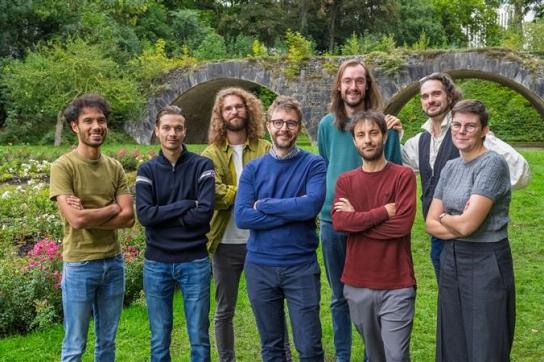
At a time when misinformation, post-truths and conspiracies are undermining confidence in science, UNamur welcomes SPiN (Science & Philosophy in Namur), a new interdisciplinary research center that questions the place of science in society. Founded last September by Olivier Sartenaer, Professor of Philosophy of Science at UNamur, SPiN brings together philosophers and scientists around a common vision: to develop a critical and accessible reflection on science in all its diversity.
.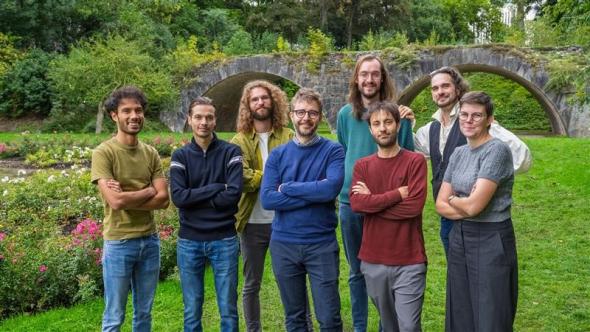
Olivier Sartenaer's team: Doan Vu Duc, Maxime Hilbert, Charly Mobers, Olivier Sartenaer, Louis Halflants, Andrea Roselli, Gauvain Leconte-Chevillard, Eve-Aline Dubois.
While UNamur is distinguished by the presence of a Philosophy of Science department within its Faculty of Science, until now there has been no research center specifically dedicated to the epistemological, ethical, political and metaphysical challenges of science. SPiN fills this gap.

"Several contingent factors enabled the creation of SPiN: the absence of a research structure specifically dedicated to these themes and the almost simultaneous arrival of four young philosophers of science. It's a bit like an alignment of the planets", explains Olivier Sartenaer.
At his side are Juliette Ferry-Danini (Faculty of Computer Science), Thibaut De Meyer (Faculty of Philosophy and Letters) and Gaëlle Pontarotti (Faculty of Science), who form the core of SPiN.
SPiN is part of a research dynamic committed to the heart of contemporary debates.

There is a real need for citizens to be enlightened on these issues. It was important for us that a research structure reflect this growing societal demand and host research on these themes.
SPiN researchers explore a wide range of themes, against a backdrop of questioning our relationship to scientific knowledge. These include:
This research is carried out by an interdisciplinary team of teacher-researchers, doctoral students and post-docs from the various faculties of UNamur.
SPiN organizes weekly seminars devoted to current research in philosophy of science, as well as seminars linked to more specific themes: health, life sciences, cosmology and theories of emergence and reductionism in the natural sciences.
But SPiN is not limited to the academic sphere: the center intends to take these issues outside the university walls, through events and activities accessible to all. An inaugural event is already planned for next spring on a topical theme: mistrust in science. More info to come!

A delegation from the Université de Namur took part in an exploratory mission to the Université Cheikh Anta Diop (UCAD) in Dakar, Senegal. The aim: to discover the research carried out in the field, meet UCAD researchers and initiate future collaborations between the two institutions.
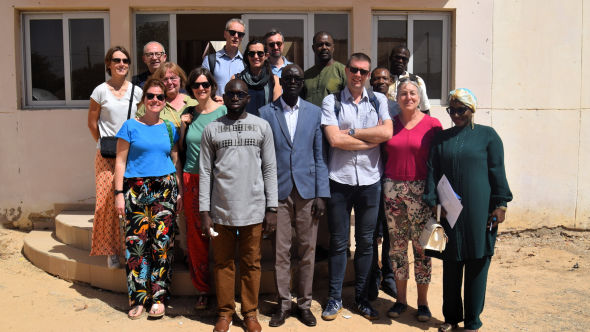
Ten members of UNamur's academic and scientific staff, accompanied by the International Relations Department and the NGO FUCID, the University Forum for International Development Cooperation, took part in an exploratory mission co-organized with UCAD. The mission was part of the university's drive to strengthen partnerships with the South, by promoting exchanges, raising researchers' awareness of the issues facing the global South, and helping new projects to emerge.
For a week, several activities were organized to enable members of the delegation to discover the Senegalese university: a visit to UCAD and discovery of its issues, exchanges around the concept of "One Health", meetings between researchers, a field visit and a closing moment in the presence of institutional partners.
Catherine Linard, professor at the Faculty of Sciences, was part of the Namur delegation "Going on site and exchanging with our Senegalese colleagues is very important. It allows us to discover the wealth of their research, in fields often directly connected to realities on the ground," she explains.
Since 2015, Catherine Linard has been collaborating with UCAD, notably as part of a research and development project supported by ARES. "From this initial collaboration a number of dynamics were born. Several Senegalese PhD students have come to Belgium to pursue their research. And conversely, one of my Belgian PhD students, Camille Morlighem, who is working on the creation of malaria risk maps in Senegal, has been able to benefit from mobility grants for research stays at UCAD. We've also established teaching exchanges: I went to Dakar to give a week's training to PhD students in geography, and a fellow health geographer, Aminata Niang Diène, comes to Belgium every year to speak in one of my master's courses," continues the professor.


The delegation brought together profiles from several UNamur faculties and departments:
Committed to international cooperation and development, the University of Namur maintains numerous collaborations with several institutions around the world. These collaborations take the form of research projects, teaching or training assignments, or student training as part of UNamur's teaching offer or as part of short-term internships, particularly research internships.
The University of Namur is committed to international cooperation and development.The SPiN research center invites you to its inaugural event.
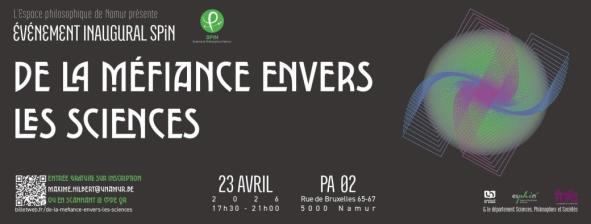
For its inaugural conference, the SPiN (Science & Philosophy in Namur) center will be joined by Claire Rommelaere, a lawyer and researcher at the Center for Bioethics at the University of Namur, and Aude Bandini, a philosopher of science at the University of Montreal, to take a critical look at the theme of "distrust of science." The urgency of addressing this issue is clear in our era, where, despite an overall stable level of trust in science, the parameters of public debate are frequently blurred by misinformation.
Having had the opportunity to observe philosophers of science in their natural habitat for nearly fifteen years, Claire Rommelaere will share her thoughts on whether or not we should trust those who think about science.
For her part, Aude Bandini will address a major problem that we all face at a time when the mass of available knowledge is such that it is impossible to acquire it on our own. Indeed, the socially distributed nature of knowledge generally leaves us no choice but to rely on the authority of experts, even on very important issues (such as health). However, when we rely on others in this way and follow recommendations that, due to our ignorance, we have no means of evaluating, we place ourselves in a relationship of "epistemic dependence" that conflicts with our aspirations for intellectual autonomy and forces us to ask ourselves a question whose answer may prove unbearable: is intellectual autonomy nothing more than a myth?
Conference hosted by journalist Maïté Warland.
Program:
Registration deadline: April 16.
Free of charge.
Conference organized by the SPiN Research Center at the ESPHIN Institute.
A plant does not seem to have much in common with animals. Yet naturalists of the eighteenth and nineteenth centuries attempted to study plants as if they were animals: they set out, for example, to find an equivalent to the circulatory or respiratory systems. Why did they feel the need to resort to analogical reasoning? What results did they obtain? And more generally, what is the value of this type of reasoning?
12:15 PM – Welcome and light lunch
1:30 PM – Introductory remarks
Thibault De Meyer (University of Namur): Why Analogy?
2:15 PM – Session 1: Theory and Practice - Cristiana Oghina-Pavie (University of Angers): The analogy of pragmatic knowledge: actions and transactions in 19th-century horticulture and Quentin Hiernaux (FNRS / Free University of Brussels): The plant-animal analogy employed by A.-P. de Candolle’s physiology in addressing the issue of the sensitivity of living beings
3:45 PM – Coffee break
4:15 PM – Plenary Session 1 - Thierry Hoquet (University of Paris Nanterre): Is the plant/animal analogy valid?
5:45 PM – End of the first day
7:00 PM – Conference dinner
9:00 AM – Welcome
9:15 AM – Session 2: Relationships and Boundaries of the Living - Dario Galvão (University of Namur): Analogy and the Faculties of the Living: Animal Reason and Plant Sensibility in the Enlightenment and Ugo Batini (University of Poitiers): Understanding Humanity Through Plants: Analogy and the Metaphysics of the Living in Schopenhauer
10:45 AM – Coffee break
11:15 AM – Plenary Lecture 2 – Pascal Duris (University of Bordeaux): Plants as Humans. Analogy in Linnaeus and the Linneans
12:45 PM – Lunch break
2:00 PM – Toward New Disciplines - Vera Staetmanns (Ruhr University Bochum): Do Plants Think? Analogy in the Plant Psychology of Raoul Heinrich Francé (1874–1943) and Matthieu Amat (University of Rouen Normandy): Analogy and Homology: Transfers from the Life Sciences to the Cultural Sciences in the 19th Century
3:30 PM – Coffee break
4:00 PM – Plenary Session 3 - Aliènor Bertrand (CNRS / ENS de Lyon): “Les œufs du vent” and Their Descendants
5:30 PM – Closing of the conference
5:45 PM – End of the day
Contact: Dario Galvao - dario.galvao@unamur.be
Several videos explain the different research themes tackled in recent years.
