General medicine is a clinical specialty focused on primary care with its own unique characteristics: varied activities covering all fields of medicine, a comprehensive and longitudinal approach centered on people of all ages, and intervention at an early and undifferentiated stage of disease development. The general practitioner is the central figure in their patients' health and establishes a lasting and privileged relationship of trust with them. 

Training

After 100 years of teaching medicine, the University of Namur has been offering students the opportunity to specialize in general medicine on its Namur campus since October 2024. 

This is a unique opportunity for students to continue their studies at a faculty that prides itself on its proximity and the quality of its teaching.

Médecine générale

The advantages of the specialized master's degree at UNamur

Médecine générale

A joint degree with UCLouvain

to combine the strengths and expertise of our two universities.

Raising awareness of general medicine practiced in rural areas

and its specific characteristics: intensity of the doctor-patient relationship, more frequent technical procedures, less frequent use of emergency services, etc.

Active teaching methods, including healthcare simulation

by immersion in simulated situations that are as close as possible to real-life scenarios. 

Mentoring by an experienced physician

the student's choice, ensuring that they are effectively prepared for their future profession, while maintaining a healthy work-life balance.

Tutor and internship supervisor area

Become a mentor 

Host a third-year bachelor's degree student

During their third year of bachelor's studies, UNamur students accompany a general practitioner in the field for three weeks. 

This internship is an opportunity to establish contact with a patient for the first time, to demonstrate listening skills, to put professional confidentiality into practice, to appreciate how theoretical knowledge is put into practice, to apply certain basic procedures, but also to reflect on one's future personal medical practice. 

Would you like to host an intern? 

Contact the Faculty of Medicine: administration-medecine@unamur.be


Become a preceptor

Hosting a general medicine assistant

Find out the three requirements for becoming a training supervisor.

Create your Fordoc account and register for training courses

Find out how to create your Fordoc account to register for training courses and download certificates.

Maintain your internship supervisor accreditation

Participate in training courses for training supervisors.

Rural medicine at UNamur

The University Observatory on Rural Medicine (OUMRu) 

The shortage of doctors is a major public health issue in rural areas. The Observatory's mission is to gain a better understanding of the scarcity of general practitioners, particularly in areas of Wallonia where there is a shortage, and to identify realistic and concrete solutions by giving a voice to those working in the field.

Vue aérienne d'une zone rurale

UNamur tackles the shortage of doctors in rural areas

To address the challenge of the uneven geographical distribution of general practitioners, UNamur is innovating by offering internships in rural areas that combine accommodation, transport facilities, and supervision by experienced general practitioners.

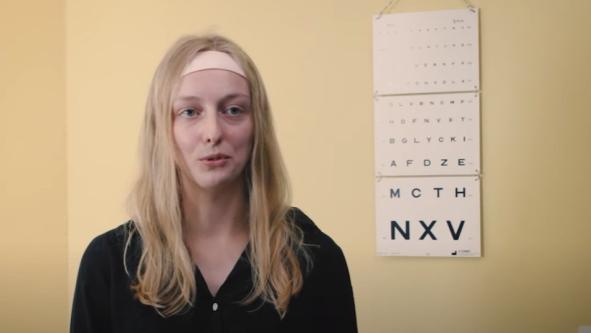
An immersion in general medicine in the heart of new regions, to inspire the desire to settle in rural areas.
Stage en médecine rurale

The literature clearly shows that internships in rural areas increase the likelihood of new practitioners setting up in these areas, which are where the greatest shortages are concentrated. This is therefore an important lever in combating the uneven geographical distribution of general practitioners and ensuring access to healthcare. 

In collaboration with the CCFFMG and the OUMRu, we are developing "all-in-one" packages to offer students internship programs that include a supervising physician, accommodation, and transportation. 

"Community integration" is also an important aspect: students must be able to interact with patients and medical facilities in the region. The promotion of the region by local stakeholders is also taken into account.

Dr. Dominique Henrion

Contact

Are you a general practitioner, politician, rural community leader, or ordinary citizen? 

Please feel free to contact our project manager
Aurélie Strickaert: aurelie.strickaert@unamur.be 
Spotlight

News

An immersive game to strengthen interprofessional collaboration in healthcare

Medicine
Pharmacology, toxicology and pharmacy
Pedagogy

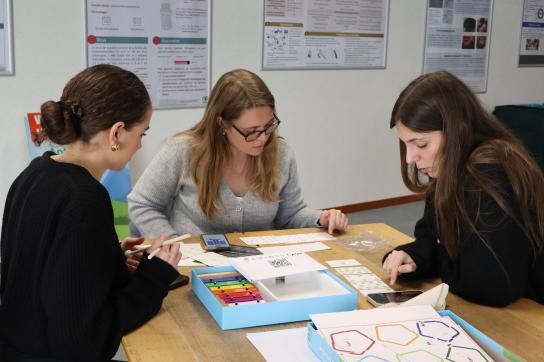
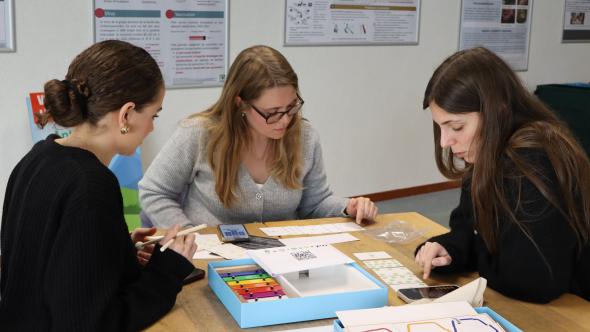
On Thursday, March 12, students from the Master’s program in General Medicine and the Master’s program in Pharmaceutical Sciences at UNamur, as well as students from the Master’s program in Nursing at Henallux, gathered to test “Eugène’s Journey,” an immersive game created as part of the PUNCh (Namur University Pedagogy in Transition) project. This educational game was designed to strengthen communication and collaboration among future healthcare professionals. Following the gameplay phase, a structured debriefing was conducted with the students to transform the experience into a collective learning opportunity.
Etudiantes autour d'un jeu de plateau

This PUNCh project, led by Hélène Givron, associate professor and educational coordinator in the Department of Psychology at the University of Namur, is designed to address educational needs in interprofessional training. The goal was to develop a fun, flexible tool that could be adapted for use in various contexts, in order to address a significant challenge in the field. 

The main objective of this workshop was to strengthen interprofessional communication and collaboration in the healthcare field. A multidisciplinary team was therefore formed, composed of representatives from various sectors: Catherine Magnette (Instructor, Department of Medicine), Romain Siriez (Educational Coordinator, Department of Pharmacy), and Laura Demarthe (Assistant, Department of Psychology), to bring together students from the Master’s in General Practice and the Master’s in Pharmaceutical Sciences at UNamur, as well as the Master’s in Nursing (Hénallux), to address these issues.

An immersive game experience designed to explore collaboration in a hospital setting

The workshop was based on the board game “Eugène’s Journey,” designed by Christine Laurent (a public health physician and educational game designer) and inspired by the concept of an escape room, with the aim of providing students with an immersive and collaborative experience. Participants were divided into teams of three to four players, consisting of a physician, a nurse, and one or two pharmacists, to encourage interprofessional collaboration. Each team had to progress through a scenario by solving a series of puzzles within 45 minutes, under the watchful eye of instructors. To succeed, students had to collaborate and rely on verbal communication to exchange ideas, share information, and coordinate their actions

Jeu de plateau

This educational tool draws on various skills essential to teamwork, such as active listening, the ability to clearly articulate ideas, task coordination, and collective decision-making. Each puzzle presented a challenge that required genuine cooperation among group members, as no solution could be found by working alone. 

A structured debriefing to turn experience into learning

Following the game phase, a debriefing session was held with all participants. This discussion aimed to reflect on the experience gained during the workshop and to encourage students to think about the concepts of collaboration and interprofessional communication in the healthcare context. The game served as a tool to illustrate certain cooperative scenarios, but also to highlight challenges related to coordination and information sharing. The debriefing thus facilitated a dialogue among students from different programs regarding the barriers and enablers of effective communication. Participants had the opportunity to share their feelings, compare their perspectives, and discuss strategies to promote better collaboration among healthcare professionals. 

The educational objectives of the workshop were clearly defined:

  • Address the skills necessary for interprofessional collaboration, such as communication and collective decision-making.
  • Identify the drivers and barriers to interprofessional collaboration.
  • Contribute to improving the quality and safety of care through better coordination among professionals.

In just 1 hour and 45 minutes, it is probably unrealistic to expect to see an improvement in students’ skills. However, we hope that they will gain a better understanding of interprofessional communication. We are trying to plant the seeds for their future collaborative practices. 

Hélène Givron Lecturer and Academic Coordinator

Student Testimonials

I hope this experience will lead to a change in practice. The game gives you the tools to assert yourself, especially as a young doctor when you have to integrate into teams with more experienced colleagues. It helps you stand your ground and build self-confidence.” — Yorick, medical student 

Based on the information we received, we expected an activity with exclusively ‘medical’ content. This unique experience takes us beyond the scope of typical role-playing scenarios.” - Margaux, medical student 

I found this workshop to be very useful; it adds value and is very interesting. We never have simulations focused on collaboration. It would be interesting to incorporate this into the curriculum.” – Nursing student

A versatile tool

The game “Eugène’s Journey” was designed by Dr. Christine Laurent, a public health physician and educational game designer, in collaboration with Emeline Boreux, a graphic designer and illustrator. “The game’s development spanned a year and a half, allowing time to create a structure robust enough to accommodate a variety of puzzles and multiple educational objectives. Its versatility lies in the ability to modify the central puzzle, adapt the clues, and tailor the debriefing to different skills depending on the audience. This tool can indeed be adapted to other disciplines, such as project management or engineering, for example,” explains Christine Laurent, the game’s designer.

Jeu Le Voyage d'Eugène

Interactivity at the heart of the general practice curriculum

This experience is part of a series of immersive sessions offered to students in the Master’s program in General Practice at UNamur. “Students spend most of their time on clinical rotations during their master’s program. However, they also have several more academic-focused days during which we strive to develop interactive activities, explains Catherine Magnette, lecturer and general practitioner. The upcoming workshops will therefore focus on interprofessional collaboration in the event of an outbreak in nursing homes and on collaboration with medical consultants and occupational physicians.

Etudiants autour d'un jeu de plateau

Master's students specializing in general medicine meet people with disabilities

Medicine

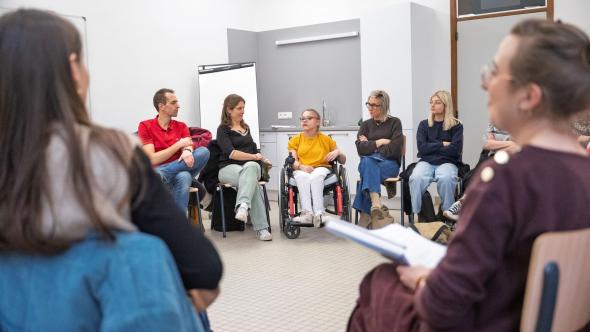
On December 4, second-year students in the Master's program specializing in general medicine at UNamur enjoyed a unique training day. They had the opportunity to interact directly with residents of Château Vert, an institution that welcomes people with disabilities. The goal was to better understand their expectations of general practitioners and improve the quality of medical care for these patients with specific needs.
Echanges entre des étudiants et des résidents du Château Vert

This was a first for UNamur: for the first time, several residents of Château Vert made the trip to the Faculty of Medicine to meet students enrolled in the Master's program specializing in general medicine. The trip required a significant investment of time and energy on the part of the Château Vert teams and residents. "The residents made the effort to come to us. It is a rare gift to be able to talk directly with patients and their caregivers," says Catherine Magnette, general practitioner and organizer of the day. "Who better than the patient themselves, and possibly their close caregiver, can express their expectations of their general practitioner? It is about putting the patient back at the center by giving them a voice," she continues.

Three workshops to better understand and provide better support

The day was structured around three workshops, offered as part of the academic curriculum for the Master's degree specializing in general medicine:

  • "Dys" disorders
    : Understanding learning and communication difficulties and adapting medical practices.
  • The specificities of medical care for people with disabilities
    To better understand patients' vulnerabilities and skills in order to individualize care. Certain pathologies or medical issues are specific to these patients and are rarely addressed in the basic curriculum.
  • Meeting with the residents of Château Vert and their caregivers
    A moment of direct exchange, where students were able to ask questions, listen to life experiences, and hear what patients expect—or fear—in a medical consultation.

Enriching testimonials

"I expect my general practitioner to be kind, but above all to take the time to explain clearly what they are going to do and why they are treating me. I need them to speak slowly because my brain takes longer to understand than other people's. It's very important for me to understand the situation," - Cassie (17), resident at Château Vert. 

Etudiants et résidents du Château Vert

"What I expect from a doctor is that they put themselves in my shoes and understand my pain, even if I can't always express it very precisely." - Christelle, resident at Château Vert. 

"It's really important for doctors to be able to put themselves in their patients' shoes. For example, with my son, explaining the medical tests he's going to have to undergo by miming them beforehand on his cuddly toy is an approach that really works. It reassures him." - Audrey, mother of Arthur (9), resident at Château Vert. 

After hearing these testimonials, the students were able to ask questions and talk with the residents, their caregivers, and the supervisory teams. 

Medical studies pay too little attention to the specificities of caring for people with disabilities. This day provides an opportunity to enrich the training of future doctors in inclusive care.

Catherine Magnette General practitioner
Echanges entre étudiants et résidents du Château Vert

The educational objectives of this day were therefore multiple:

  • Identify the medical, relational, and social specificities related to disability;
  • Use this knowledge to improve patient care;
  • To understand the role of those who support people with specific needs;
  • Develop a patient-centered, respectful, and collaborative care model.

Studies

Discover medical training and the Master's degree in general medicine at UNamur 

Faced with medical shortages, UNamur proposes an innovative solution: integrated internships in disadvantaged areas

Students
Health

UNamur was a pioneer in creating, in 2014, an internship in General Medicine, compulsory for all bachelier 3 students. Faced with a growing shortage of general practitioners in several areas of Belgium, the University of Namur is launching a new concrete and ambitious initiative: sending bachelier 3-level trainees to medically under-resourced regions.

Médecine rurale

The aim of these internships is to raise medical students' awareness of these regions, in the hope that some of them will return to do their assistantships or even settle there permanently as GPs. This initial immersion in the field creates a concrete link with local realities and sparks a genuine return dynamic.
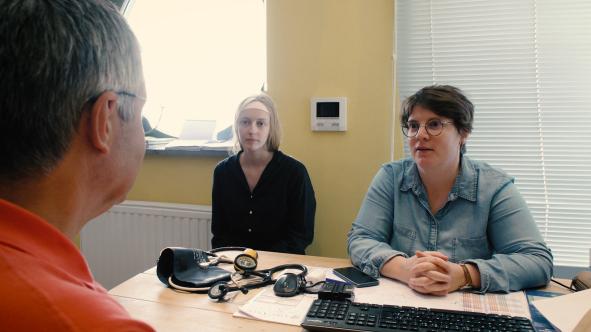
Médecine rurale

Organized by UNamur, this project is based on close collaboration with doctors based in the areas concerned, who will play a central role as tutors and partners in the field.

The proposal stands out for its "all-in-one" formula: students benefit from a supervised internship, accommodation on site, as well as organized transport when necessary. This scheme aims to remove any logistical obstacles that might discourage young people from going to train in these areas.

The first edition of this "all-in" internship took place during June 2025 in the commune of Florennes, with the active support of the local authorities. This pilot project marks an important step in validating the proposed model.

Other communes, such as Libin, Ohey and Bouillon (in collaboration with Santé Ardenne), have already expressed interest in hosting the program in 2026.

How long is the internship? How many students are doing this internship?

Discover the project in pictures :

Médecine rurale

A call for support from local authorities

If this initiative is to take full shape, the support of the communes concerned is essential. The involvement of local authorities, particularly in providing housing and facilitating travel, is a prerequisite for the success and sustainability of this program.

UNamur therefore calls on the communes to commit themselves alongside us to this supportive and structuring approach for the future of the Belgian healthcare system.
UNamur and Mutualité chrétienne form partnership to better understand shortage of general practitioners in rural areas

Medicine
Geography
Health

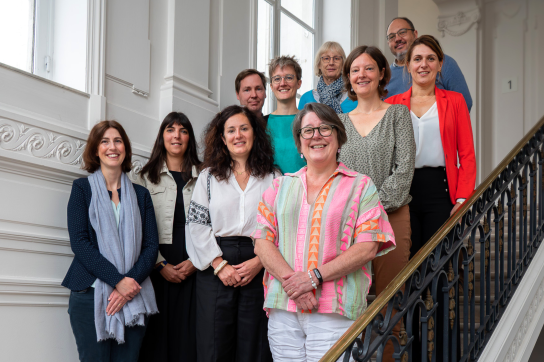
The University of Namur (UNamur) and Christian Mutuality (MC) announce a groundbreaking collaboration aimed at better understanding and combating the shortage of general practitioners in rural areas. This partnership is part of the Observatoire Universitaire en Médecine Rurale (OUMRu), launched in 2023 by UNamur.

équipe-unamur-mutualité-chrétienne

This partnership involves the co-financing of an ambitious, multidisciplinary research project conducted by UNamur over a 4-year period. Objectives? To understand the various mechanisms contributing to the disparity in the supply of general practitioners in Wallonia, and to objectify shortages on a local scale.

A strategic partnership

This project contributes directly to the MC's commitment to improving access to healthcare. By supporting research, the MC helps to orient healthcare policies towards the real needs of territories. The approach is a valuable lever for strengthening an equitable and sustainable healthcare offer, in phase with the values of solidarity carried by the MC.

Image
Annick Castiaux

"For UNamur, it is also vital to be able to act on this theme of accessibility to care, not only in our research, but also by including this dimension right from the training of future health and care professionals. Thanks to this partnership with Mutualité chrétienne, we will be able to count on the added value of a high-performance ecosystem while benefiting from MC's expertise in the field."

Annick Castiaux Rector of UNamur

This project marks the first formal collaboration between UNamur and the MC, bringing UNamur's research to the attention of those working in the field and the general public. The Observatoire Universitaire en Médecine Rurale, which brings together general practitioners, sociologists and geographers, will benefit from the expertise and network of the MC to carry out its field surveys and applied research projects.

The project marks the first formal collaboration between UNamur and the MC, enabling UNamur's research to be brought to the attention of those working in the field and the general public.

Objectives and expected results

More specifically, the project has three specific objectives:

  • Understand the mechanisms behind the disparity in the supply of general medicine in Wallonia, and in particular in the province of Namur.
  • Create an index of the attractiveness of practice locations for young doctors.
  • Evaluate the perception of accessibility to care in general medicine from the point of view of patients.

Expected results include the creation of specific indices and the formulation of recommendations to improve the situation in shortage areas. These results will be promoted via multiple channels: academic training at UNamur, the scientific community, the medical sector, politics, the general public.

The project will focus on three complementary phases:

  1. Evolution of the GP profession in rural areas : This qualitative phase includes semi-directive interviews with GPs to understand the transformations of the profession and identify factors influencing the attractiveness of rural areas.
  2. Attractiveness of practice locations for young doctors: An attractiveness index will be refined and implemented in a Geographic Information System (GIS) to assess locations conducive to the installation of young practitioners.
  3. Accessibility to care for patients: A mixed analysis of quantitative and qualitative data will enable us to understand patients' perceptions of accessibility to care in rural areas.

The project therefore has the particularity of taking into account both the point of view of patients and healthcare providers in order to provide a 360° overview of the problem of the scarcity of supply in general practice, and in rural areas in particular.

Previous research projects

This project extends two research projects already carried out as part of the OUMRu:

  1. Rurality index for the Walloon Region: From December 2023 to April 2024, geographer Aliz Hevesi, under the direction of Catherine Linard (NARILIS-ILEE Institutes), created a rurality index at sub-municipal level, relevant for assessing situations of shortage at local level. This research also included work on the theoretical definition of an attractiveness index for young practitioners.
  2. Perception of accessibility to care: From January to June 2025, sociologist Amélie Pierre (Institut Transitions), in collaboration with Dr. Dominique Henrion, coordinator of the OUMRu, is conducting a study to assess the perception of accessibility to general medical care in different regions, by interviewing a panel of 5.000 Belgian citizens via "The Social Study", as well as focus groups of patients in the provinces of Namur and Luxembourg.
.

About UNamur

Founded in 1831, the mission of the University of Namur (UNamur) is teaching, research and community service. UNamur comprises: 7 Faculties, 1 Inter-faculty Department, 11 Research Institutes and 10 Technology Platforms. It is home to over 7,300 students of 75 different nationalities and also has over 1,300 staff members.

logo-université-de-namur

About Christian Mutuality

With 1,125,000 members in French- and German-speaking areas, the MC defends quality healthcare accessible to all. It offers solidarity-based services, where everyone contributes to the health of all. Through its insurance products, it offers professional support tailored to individual needs. It also contributes to health policies and encourages health-promoting behavior.

logo-mutualité-chrétienne

An immersive game to strengthen interprofessional collaboration in healthcare

Medicine
Pharmacology, toxicology and pharmacy
Pedagogy

On Thursday, March 12, students from the Master’s program in General Medicine and the Master’s program in Pharmaceutical Sciences at UNamur, as well as students from the Master’s program in Nursing at Henallux, gathered to test “Eugène’s Journey,” an immersive game created as part of the PUNCh (Namur University Pedagogy in Transition) project. This educational game was designed to strengthen communication and collaboration among future healthcare professionals. Following the gameplay phase, a structured debriefing was conducted with the students to transform the experience into a collective learning opportunity.

Etudiantes autour d'un jeu de plateau

This PUNCh project, led by Hélène Givron, associate professor and educational coordinator in the Department of Psychology at the University of Namur, is designed to address educational needs in interprofessional training. The goal was to develop a fun, flexible tool that could be adapted for use in various contexts, in order to address a significant challenge in the field. 

The main objective of this workshop was to strengthen interprofessional communication and collaboration in the healthcare field. A multidisciplinary team was therefore formed, composed of representatives from various sectors: Catherine Magnette (Instructor, Department of Medicine), Romain Siriez (Educational Coordinator, Department of Pharmacy), and Laura Demarthe (Assistant, Department of Psychology), to bring together students from the Master’s in General Practice and the Master’s in Pharmaceutical Sciences at UNamur, as well as the Master’s in Nursing (Hénallux), to address these issues.

An immersive game experience designed to explore collaboration in a hospital setting

The workshop was based on the board game “Eugène’s Journey,” designed by Christine Laurent (a public health physician and educational game designer) and inspired by the concept of an escape room, with the aim of providing students with an immersive and collaborative experience. Participants were divided into teams of three to four players, consisting of a physician, a nurse, and one or two pharmacists, to encourage interprofessional collaboration. Each team had to progress through a scenario by solving a series of puzzles within 45 minutes, under the watchful eye of instructors. To succeed, students had to collaborate and rely on verbal communication to exchange ideas, share information, and coordinate their actions

Jeu de plateau

This educational tool draws on various skills essential to teamwork, such as active listening, the ability to clearly articulate ideas, task coordination, and collective decision-making. Each puzzle presented a challenge that required genuine cooperation among group members, as no solution could be found by working alone. 

A structured debriefing to turn experience into learning

Following the game phase, a debriefing session was held with all participants. This discussion aimed to reflect on the experience gained during the workshop and to encourage students to think about the concepts of collaboration and interprofessional communication in the healthcare context. The game served as a tool to illustrate certain cooperative scenarios, but also to highlight challenges related to coordination and information sharing. The debriefing thus facilitated a dialogue among students from different programs regarding the barriers and enablers of effective communication. Participants had the opportunity to share their feelings, compare their perspectives, and discuss strategies to promote better collaboration among healthcare professionals. 

The educational objectives of the workshop were clearly defined:

  • Address the skills necessary for interprofessional collaboration, such as communication and collective decision-making.
  • Identify the drivers and barriers to interprofessional collaboration.
  • Contribute to improving the quality and safety of care through better coordination among professionals.

In just 1 hour and 45 minutes, it is probably unrealistic to expect to see an improvement in students’ skills. However, we hope that they will gain a better understanding of interprofessional communication. We are trying to plant the seeds for their future collaborative practices. 

Hélène Givron Lecturer and Academic Coordinator

Student Testimonials

I hope this experience will lead to a change in practice. The game gives you the tools to assert yourself, especially as a young doctor when you have to integrate into teams with more experienced colleagues. It helps you stand your ground and build self-confidence.” — Yorick, medical student 

Based on the information we received, we expected an activity with exclusively ‘medical’ content. This unique experience takes us beyond the scope of typical role-playing scenarios.” - Margaux, medical student 

I found this workshop to be very useful; it adds value and is very interesting. We never have simulations focused on collaboration. It would be interesting to incorporate this into the curriculum.” – Nursing student

A versatile tool

The game “Eugène’s Journey” was designed by Dr. Christine Laurent, a public health physician and educational game designer, in collaboration with Emeline Boreux, a graphic designer and illustrator. “The game’s development spanned a year and a half, allowing time to create a structure robust enough to accommodate a variety of puzzles and multiple educational objectives. Its versatility lies in the ability to modify the central puzzle, adapt the clues, and tailor the debriefing to different skills depending on the audience. This tool can indeed be adapted to other disciplines, such as project management or engineering, for example,” explains Christine Laurent, the game’s designer.

Jeu Le Voyage d'Eugène

Interactivity at the heart of the general practice curriculum

This experience is part of a series of immersive sessions offered to students in the Master’s program in General Practice at UNamur. “Students spend most of their time on clinical rotations during their master’s program. However, they also have several more academic-focused days during which we strive to develop interactive activities, explains Catherine Magnette, lecturer and general practitioner. The upcoming workshops will therefore focus on interprofessional collaboration in the event of an outbreak in nursing homes and on collaboration with medical consultants and occupational physicians.

Etudiants autour d'un jeu de plateau

Master's students specializing in general medicine meet people with disabilities

Medicine

On December 4, second-year students in the Master's program specializing in general medicine at UNamur enjoyed a unique training day. They had the opportunity to interact directly with residents of Château Vert, an institution that welcomes people with disabilities. The goal was to better understand their expectations of general practitioners and improve the quality of medical care for these patients with specific needs.

Echanges entre des étudiants et des résidents du Château Vert

This was a first for UNamur: for the first time, several residents of Château Vert made the trip to the Faculty of Medicine to meet students enrolled in the Master's program specializing in general medicine. The trip required a significant investment of time and energy on the part of the Château Vert teams and residents. "The residents made the effort to come to us. It is a rare gift to be able to talk directly with patients and their caregivers," says Catherine Magnette, general practitioner and organizer of the day. "Who better than the patient themselves, and possibly their close caregiver, can express their expectations of their general practitioner? It is about putting the patient back at the center by giving them a voice," she continues.

Three workshops to better understand and provide better support

The day was structured around three workshops, offered as part of the academic curriculum for the Master's degree specializing in general medicine:

  • "Dys" disorders
    : Understanding learning and communication difficulties and adapting medical practices.
  • The specificities of medical care for people with disabilities
    To better understand patients' vulnerabilities and skills in order to individualize care. Certain pathologies or medical issues are specific to these patients and are rarely addressed in the basic curriculum.
  • Meeting with the residents of Château Vert and their caregivers
    A moment of direct exchange, where students were able to ask questions, listen to life experiences, and hear what patients expect—or fear—in a medical consultation.

Enriching testimonials

"I expect my general practitioner to be kind, but above all to take the time to explain clearly what they are going to do and why they are treating me. I need them to speak slowly because my brain takes longer to understand than other people's. It's very important for me to understand the situation," - Cassie (17), resident at Château Vert. 

Etudiants et résidents du Château Vert

"What I expect from a doctor is that they put themselves in my shoes and understand my pain, even if I can't always express it very precisely." - Christelle, resident at Château Vert. 

"It's really important for doctors to be able to put themselves in their patients' shoes. For example, with my son, explaining the medical tests he's going to have to undergo by miming them beforehand on his cuddly toy is an approach that really works. It reassures him." - Audrey, mother of Arthur (9), resident at Château Vert. 

After hearing these testimonials, the students were able to ask questions and talk with the residents, their caregivers, and the supervisory teams. 

Medical studies pay too little attention to the specificities of caring for people with disabilities. This day provides an opportunity to enrich the training of future doctors in inclusive care.

Catherine Magnette General practitioner
Echanges entre étudiants et résidents du Château Vert

The educational objectives of this day were therefore multiple:

  • Identify the medical, relational, and social specificities related to disability;
  • Use this knowledge to improve patient care;
  • To understand the role of those who support people with specific needs;
  • Develop a patient-centered, respectful, and collaborative care model.

Studies

Discover medical training and the Master's degree in general medicine at UNamur 

Faced with medical shortages, UNamur proposes an innovative solution: integrated internships in disadvantaged areas

Students
Health

UNamur was a pioneer in creating, in 2014, an internship in General Medicine, compulsory for all bachelier 3 students. Faced with a growing shortage of general practitioners in several areas of Belgium, the University of Namur is launching a new concrete and ambitious initiative: sending bachelier 3-level trainees to medically under-resourced regions.

Médecine rurale

The aim of these internships is to raise medical students' awareness of these regions, in the hope that some of them will return to do their assistantships or even settle there permanently as GPs. This initial immersion in the field creates a concrete link with local realities and sparks a genuine return dynamic.

Médecine rurale

Organized by UNamur, this project is based on close collaboration with doctors based in the areas concerned, who will play a central role as tutors and partners in the field.

The proposal stands out for its "all-in-one" formula: students benefit from a supervised internship, accommodation on site, as well as organized transport when necessary. This scheme aims to remove any logistical obstacles that might discourage young people from going to train in these areas.

The first edition of this "all-in" internship took place during June 2025 in the commune of Florennes, with the active support of the local authorities. This pilot project marks an important step in validating the proposed model.

Other communes, such as Libin, Ohey and Bouillon (in collaboration with Santé Ardenne), have already expressed interest in hosting the program in 2026.

How long is the internship? How many students are doing this internship?

Discover the project in pictures :

Médecine rurale

A call for support from local authorities

If this initiative is to take full shape, the support of the communes concerned is essential. The involvement of local authorities, particularly in providing housing and facilitating travel, is a prerequisite for the success and sustainability of this program.

UNamur therefore calls on the communes to commit themselves alongside us to this supportive and structuring approach for the future of the Belgian healthcare system.

UNamur and Mutualité chrétienne form partnership to better understand shortage of general practitioners in rural areas

Medicine
Geography
Health

The University of Namur (UNamur) and Christian Mutuality (MC) announce a groundbreaking collaboration aimed at better understanding and combating the shortage of general practitioners in rural areas. This partnership is part of the Observatoire Universitaire en Médecine Rurale (OUMRu), launched in 2023 by UNamur.

équipe-unamur-mutualité-chrétienne

This partnership involves the co-financing of an ambitious, multidisciplinary research project conducted by UNamur over a 4-year period. Objectives? To understand the various mechanisms contributing to the disparity in the supply of general practitioners in Wallonia, and to objectify shortages on a local scale.

A strategic partnership

This project contributes directly to the MC's commitment to improving access to healthcare. By supporting research, the MC helps to orient healthcare policies towards the real needs of territories. The approach is a valuable lever for strengthening an equitable and sustainable healthcare offer, in phase with the values of solidarity carried by the MC.

Image
Annick Castiaux

"For UNamur, it is also vital to be able to act on this theme of accessibility to care, not only in our research, but also by including this dimension right from the training of future health and care professionals. Thanks to this partnership with Mutualité chrétienne, we will be able to count on the added value of a high-performance ecosystem while benefiting from MC's expertise in the field."

Annick Castiaux Rector of UNamur

This project marks the first formal collaboration between UNamur and the MC, bringing UNamur's research to the attention of those working in the field and the general public. The Observatoire Universitaire en Médecine Rurale, which brings together general practitioners, sociologists and geographers, will benefit from the expertise and network of the MC to carry out its field surveys and applied research projects.

The project marks the first formal collaboration between UNamur and the MC, enabling UNamur's research to be brought to the attention of those working in the field and the general public.

Objectives and expected results

More specifically, the project has three specific objectives:

  • Understand the mechanisms behind the disparity in the supply of general medicine in Wallonia, and in particular in the province of Namur.
  • Create an index of the attractiveness of practice locations for young doctors.
  • Evaluate the perception of accessibility to care in general medicine from the point of view of patients.

Expected results include the creation of specific indices and the formulation of recommendations to improve the situation in shortage areas. These results will be promoted via multiple channels: academic training at UNamur, the scientific community, the medical sector, politics, the general public.

The project will focus on three complementary phases:

  1. Evolution of the GP profession in rural areas : This qualitative phase includes semi-directive interviews with GPs to understand the transformations of the profession and identify factors influencing the attractiveness of rural areas.
  2. Attractiveness of practice locations for young doctors: An attractiveness index will be refined and implemented in a Geographic Information System (GIS) to assess locations conducive to the installation of young practitioners.
  3. Accessibility to care for patients: A mixed analysis of quantitative and qualitative data will enable us to understand patients' perceptions of accessibility to care in rural areas.

The project therefore has the particularity of taking into account both the point of view of patients and healthcare providers in order to provide a 360° overview of the problem of the scarcity of supply in general practice, and in rural areas in particular.

Previous research projects

This project extends two research projects already carried out as part of the OUMRu:

  1. Rurality index for the Walloon Region: From December 2023 to April 2024, geographer Aliz Hevesi, under the direction of Catherine Linard (NARILIS-ILEE Institutes), created a rurality index at sub-municipal level, relevant for assessing situations of shortage at local level. This research also included work on the theoretical definition of an attractiveness index for young practitioners.
  2. Perception of accessibility to care: From January to June 2025, sociologist Amélie Pierre (Institut Transitions), in collaboration with Dr. Dominique Henrion, coordinator of the OUMRu, is conducting a study to assess the perception of accessibility to general medical care in different regions, by interviewing a panel of 5.000 Belgian citizens via "The Social Study", as well as focus groups of patients in the provinces of Namur and Luxembourg.
.

About UNamur

Founded in 1831, the mission of the University of Namur (UNamur) is teaching, research and community service. UNamur comprises: 7 Faculties, 1 Inter-faculty Department, 11 Research Institutes and 10 Technology Platforms. It is home to over 7,300 students of 75 different nationalities and also has over 1,300 staff members.

logo-université-de-namur

About Christian Mutuality

With 1,125,000 members in French- and German-speaking areas, the MC defends quality healthcare accessible to all. It offers solidarity-based services, where everyone contributes to the health of all. Through its insurance products, it offers professional support tailored to individual needs. It also contributes to health policies and encourages health-promoting behavior.

logo-mutualité-chrétienne
All news

Agenda

All events