The UNamur School of Social Sciences, Politics and Communication brings together teachers and researchers from different disciplinary backgrounds: political science, information and communication, philosophy, sociology and law.

Presentation

The School includes 7 academics, 9 PhD students, 9 researchers and post-docs and 1 administrative staff member. It is responsible for teaching within these disciplinary fields delivered at the Faculty and directs the Bachelor of Political Science and Bachelor of Information and Communication programs. Its members are engaged in research within the Transitions and NADI Research Institutes and around three major themes: digital media & communication, transitions and the age of life, and democratic transformations.
Find out more about the UNamur School of Social Sciences, Politics and Communication

SVG

Research

See content
SVG

Organization

See content
Image
#FE-E-Commu-Témoignage-Fanny, Jérémie et Martin-Portrait

Studies in social sciences, politics, and communication

The UNamur School of Social Sciences, Politics, and Communication offers two flagship bachelor's degrees: political science and information & communication. These programs are distinguished by their innovative teaching methods based on project-based learning and the involvement of industry professionals. Courses in English and Erasmus exchange opportunities round out the programs.

Spotlight

News

Is creativity an essential skill for the future? New programs are being added to the curriculum starting this fall!

Management
Communication

Experts highlight creativity as an essential skill for tomorrow’s decision-makers in an era of widespread AI adoption. At the same time, the cultural and creative industries represent a rapidly growing sector. To keep pace with these developments, two new tracks will be introduced into the Information and Communication and Management Engineering programs starting next fall. Focus on the expected changes in the Faculty of Economics, Management, Communication, and Political Science (EMCP).
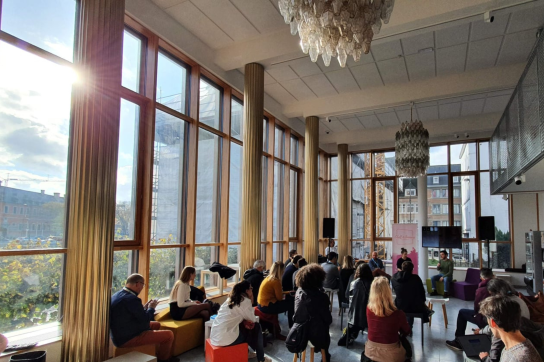
Public assistant à une conférence

Starting in their bachelor’s program, students in the Management and Information and Communication Engineering track have the opportunity to tailor their degree to a specialization rooted in market needs. This is a unique feature of the Namur program that allows students to remain versatile while avoiding the pitfall of overly specialized profiles. “It’s really a matter of adding a specific focus to the bachelor’s degree, which remains the same regardless of the track chosen, explain Anthony Simonofski and Fanny Barnabé, professors and directors of the bachelor’s programs in Management Engineering and Information and Communication, respectively.

In this context, two new tracks will be added to these two bachelor’s programs starting this fall: “Creative Technologies” in Management Engineering and “Cultural and Creative Industries” in Information and Communication.

Understanding and Experimenting with Creative Technologies

 “For the management engineering program, we’ve traditionally had two bachelor’s tracks: one in information management, focused on IT development, and one in environmental and life sciences, focused on science and sustainability, explains Anthony Simonofski. Created in collaboration with the Information and Communication program and the School of Computer Science, the “Creative Technologies” track enriches existing programs by offering students the opportunity to imagine and experiment with creative uses of technology in a responsible manner, within a context marked by numerous societal challenges

Image
Anthony Simonofski

The digital and sustainable transition presents organizations with as many challenges as it does opportunities. To innovate and develop new solutions, it is essential to cultivate creative thinking, especially in the age of generative AI. 

Anthony Simonofski Professor and Director of the Bachelor's Program in Management Engineering

What can students expect from the courses? “Some will focus on new uses of technology, understanding the digital and sustainable transitions, and new creative technologies, such as generative AI, immersive technologies (XR), and video game technologies, among others, says Anthony Simonofski.

Building connections with Namur’s creative community

As for the Bachelor’s degree in Information and Communication, the plan is to revamp the existing “Culture and Audiovisual” track, which will be renamed “Cultural and Creative Industries” starting this fall. “Alongside the more traditional tracks of ‘Journalism and News Media’ and ‘Organizational Communication,’ this overhaul aims to forge stronger ties with the cultural and creative industries (CCI) sector, which is a highly dynamic sector currently undergoing restructuring. Furthermore, the Namur ecosystem is highly stimulating, featuring events such as the KIKK festival or the FIFF, networks of stakeholders like wake!, and institutions dedicated to popularizing or mediating science and culture such as the Pavillon, the Confluent des savoirs, the Medialab, and others, explains Fanny Barnabé. 

Image
Barnabé_Fanny

A unique opportunity for students to gain hands-on experience in the cultural and creative sectors during their studies, before entering the workforce.

Fanny Barnabé Professor and Director of the Bachelor's Program in Information and Communication

While the two programs differ in terms of student profiles and career opportunities, joint courses will be offered to help students integrate into this ecosystem and explore management issues in the creative industries.

UNamur at the heart of digital creativity in Wallonia

The collaboration between UNamur and the cultural and creative industries sector is particularly evident through the wake! by Digital Wallonia label, which aims to bring together Walloon players in the field of digital creativity from a variety of sectors: universities, research centers, creative hubs, festivals, companies, artists, investment funds, and more. UNamur was quickly among the first to contribute to this momentum.

These new programs will also facilitate communication between the cultural industries and future professionals: “The need for academic research and training aligned with the needs of the digital creative industries sector is paramount, explains Delphine Jenart, wake! coordinator for KIKK. “We do indeed need a new generation of experts at the intersection of communication and creative technologies who understand the sector’s challenges regarding innovation and creativity and can formulate strategies.” 

These connections can take the form of guest lectures by professionals in the classroom, as well as internship opportunities or thesis projects.
Learn more about studying at the Faculty of Economics, Management, and Communication (EMCP) at Sciences Po

Current affairs with Act’UNamur

Communication
Political science
Students

On February 26, the Adam Smith amphitheater hosted the first major edition of Act'UNamur, a quiz on current events in 2025 organized by the Department of Social Sciences, Politics, and Communication at the EMCP Faculty. The goal? To spark students' interest in current events through a unique and fun format.
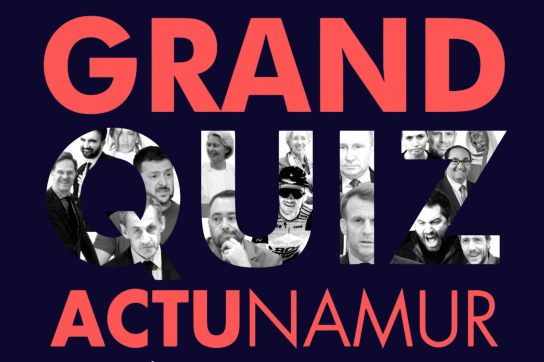
Visuel Act'UNamur

Gathered in teams of three to five players, students from the Faculty of Economics, Management, and Communication Sciences (EMCP) competed in a general knowledge quiz for nearly two hours on February 26 in a friendly yet competitive atmosphere. Questions organized by theme—politics, sports, culture, international affairs—focusing on the year 2025 were prepared by Maxime Verbesselt and Louis Liégeois, assistants in the Department of Social, Political, and Communication Sciences, as well as by students in the information & communication and political science programs. At each change of theme, one student from each team took to the keyboard to try to score points for their teammates on questions as varied as "Where did COP30 take place?", "Which artist performed at the 2025 Super Bowl?" and "In what year did Jean-Marie Le Pen qualify for the second round of the French presidential elections?" The prize: $35 gift certificates to be spent in Namur shops. 

An educational and unifying project

Behind this fun initiative lies a strong educational ambition. " Act'UNamur is a PUNCh (Pédagogie Universitaire Namuroise en Changement) project led by professors Anne-Sophie Collard and Fanny Barnabé . It aims both to encourage students to keep up with current events and to build bridges between students from different study programs," summarizes Maxime Verbesselt.

The quiz is an extension of the practical work in the course "Fundamentals of Communication and News Processing," taught this year to information and communication and political science students by Esther Haineaux and to be taken over next year by Anne-Sophie Collard and Fanny Barnabé. " Throughout the first semester, these students prepared for and participated in weekly tests on current events, the results of which count toward their overall grade," continues Maxime Verbesselt. "The quiz on February 26 follows this logic, but opens it up to all students in the Faculty, regardless of their field of study, in a relaxed atmosphere with no assessment at stake. " To encourage this collaboration between departments, the mixed teams were allowed to answer a bonus question at the end of each round. The match ended in a perfect tie, and despite an extra round to try to break the deadlock between the two teams, the score remained level. The winners therefore finally decided to split the winnings.
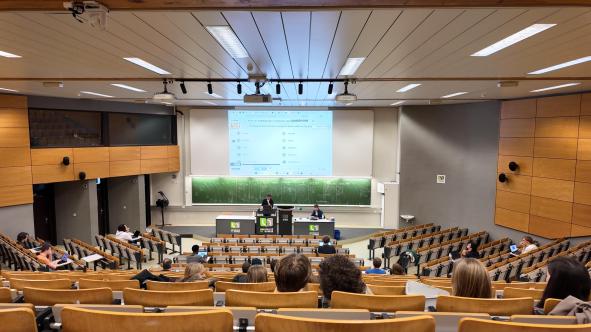
Etudiants dans un auditoire répondant à un quizz

Whether it was to test their knowledge, take on a challenge, or simply share a good time with friends, everyone had their own motivation for trying to win the faculty quiz: "In terms of preparation, I dug out my notes for the year 2025 and looked for the key facts. I had also suggested some of the questions, so I was happy to see them included. I'm also lucky to have a good memory," says Léa, a member of one of the two winning teams in this latest edition and a communications student. "I quite like quizzes and was attracted by the challenge. I didn't really prepare, but I follow the news a lot and have a good general knowledge," adds Antoine, an economics and management student.

Building on the success of this first edition, the Act'UNamur team is already looking forward to next year, with perhaps even more participants taking up the challenge! 

PUNCh | Namur University Teaching in Transition

The PUNCh team supports and advises professors, assistants, and teaching professionals in making pedagogical changes to their teaching and assessment activities.

Studies at the EMCP Faculty

New markets, increased competition, technological advances, but also environmental, energy, political, and quality of life issues... The challenges are numerous and the needs are constantly growing. Approach economic and social issues with a fresh perspective that is sensitive to social and ethical responsibility, interdisciplinarity, international dimensions, and the challenges of transition to shape a sustainable future for our society. 
FNRS Call for Proposals 2025: Analyzing life trajectories to better understand career extension

Humanities and Social Sciences
Sociology

Nathalie Burnay, professor at the EMCP Faculty and researcher at the Transitions Institute, has just been awarded prestigious WELChange funding from the F.R.S-FNRS for her interdisciplinary research project dedicated to extending careers. This is a highly topical social issue, which she is tackling in collaboration with a team of demographers from UCLouvain.
Visuel article sur Nathalie Burnay avec la chercheuse en photo et les logos du FNRS et de Transitions

Entitled ACAPARES, this research project aims to analyze career extension through the lens of workers' life trajectories and the inequalities they face. In collaboration with geographer Thierry Eggerickx from UCLouvain, Nathalie Burnay seeks to better understand the obstacles and limitations to extending careers, as encouraged by public authorities.

Image
Nathalie Burnay

With this project, we are combining the strengths of our respective disciplines: the analysis of social representations on the one hand, and the reconstruction of life courses from a demographic perspective on the other. 

Nathalie Burnay Professor at the EMCP Faculty and researcher at the Transitions Institute

A three-stage search

In concrete terms, this project, which runs from 2026 to 2030, will focus on three complementary areas: 

  • The first component will analyze the social stereotypes that weigh on workers over the age of 50. To do this, the team will draw on a large-scale quantitative survey, modeled on the 2004 CAPA survey, which was also supervised by Nathalie Burnay. The objective? To compare the evolution of these representations of older workers in the same context and based on the same protocol. This is a completely new approach!
  • The second part will focus on the health of older workers. Using quantitative data, it will look at how the health of workers—particularly those with long-term illnesses—affects whether they continue or stop working at the end of their careers.
  • Finally, the third part will examine the influence of professional activity on healthy life expectancy. Periods of unemployment, inactivity, or more difficult working conditions will thus be scrutinized by researchers.

To carry out this research, Jean-Paul Sanderson (postdoctoral demographer) recently joined UNamur.

A theme at the heart of Nathalie Burnay's work

The analysis of life trajectories from a work perspective is a recurring theme in Nathalie Burnay's research. She approaches these issues through an analysis of social policies, changing working conditions, and normative transformations in the contemporary world. In 2023, she obtained F.R.S-FNRS funding for the BRIDGE-EXT project, which focuses on post-retirement work through a comparative study of different welfare state systems. Nathalie Burnay has also just obtained ARC (Actions de Recherche Concertées) funding with Michel Ajzen (EMCP Faculty) for the "SUSCARE" project, which focuses on changes in work and the conditions for its sustainability, both for workers and managers.

Discover the Transitions and Stages of Life Center

The Transitions and Life Stages division of the Transitions Research Institute brings together researchers from different disciplinary backgrounds who analyze both the normative transformations that affect life courses and transitions between life stages. The center is particularly recognized for its work on aging, the meaning of work, and helping relationships, particularly through the concept of care

FNRS, freedom to explore

Every year, the F.R.S.-FNRS issues calls for proposals to fund fundamental research. It has developed a range of tools to provide researchers with outstanding projects with scientific and technical staff, equipment, and operating resources.

Logo FNRS

Citizens' assemblies: gimmicks or levers for change?

What the experts have to say
Democracy

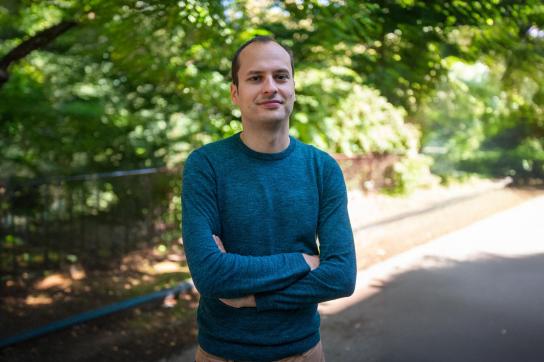
For the past fifteen years or so, participatory and deliberative democracy mechanisms have been multiplying: participatory budgets, popular consultations, citizens' panels, and so on. Vincent Jacquet, a political scientist and coordinator of the European research project Citizen Impact (ERC project, European Research Council), studies the impact of these devices from the point of view of governors and citizens.

Portrait de Vincent Jacquet

The findings are nuanced: "Unsurprisingly, today's elected representatives are very much rooted in an electoral and representative logic. Many are wary of citizens' ability to get involved beyond electoral processes. Obviously, there are differences between elected representatives and political parties. To simplify, we can say that the further left a party is and the younger its elected representatives are, the more open they will be to extra-electoral mechanisms", explains Vincent Jacquet.

So, the question is whether those in power are really integrating these citizen processes into their political decisions. "In politics, things change slowly. So it's not surprising that we're not seeing major reforms in the short term. But that doesn't mean the results aren't taken into account," nuances the political scientist. In some cases, the recommendations of citizens' assemblies feed into public policy. In others, they go unheeded. He points out, however, that the lack of impact has less to do with a desire for manipulation on the part of elected officials, than with the fact that participation is thought of alongside decision-making circuits.

To strengthen their impact, three levers are identified by the researcher:

  • Inscribe assemblies over time to feed public action over the long term.
  • Define upstream the timetable and the way in which decisions will be made in relation to citizens' recommendations.
  • Guarantee support for the recommendations by politics or civil society.

The Irish example is often cited. Citizens' assemblies paved the way for referendums on marriage for all and abortion. "It was the interaction between the deliberations of an assembly drawn by lot, social mobilization and the organization of a referendum that enabled these reforms to be carried through."

A reminder that these devices do not replace representative democracy, but can enrich it, provided they do not remain at the symbolic stage.

An academic year focused on democracy

Find the speech delivered by Rectrice Annick Castiaux at the 2025-2026 Academic Back-to-School Ceremony.

Discours de la Rectrice à la Cérémonie de rentrée académique 2025-2026

Cet article est tiré de la rubrique "Le jour où" du magazine Omalius #38 (Septembre 2025).

cover-omalius-septembre-2025

Is creativity an essential skill for the future? New programs are being added to the curriculum starting this fall!

Management
Communication

Experts highlight creativity as an essential skill for tomorrow’s decision-makers in an era of widespread AI adoption. At the same time, the cultural and creative industries represent a rapidly growing sector. To keep pace with these developments, two new tracks will be introduced into the Information and Communication and Management Engineering programs starting next fall. Focus on the expected changes in the Faculty of Economics, Management, Communication, and Political Science (EMCP).

Public assistant à une conférence

Starting in their bachelor’s program, students in the Management and Information and Communication Engineering track have the opportunity to tailor their degree to a specialization rooted in market needs. This is a unique feature of the Namur program that allows students to remain versatile while avoiding the pitfall of overly specialized profiles. “It’s really a matter of adding a specific focus to the bachelor’s degree, which remains the same regardless of the track chosen, explain Anthony Simonofski and Fanny Barnabé, professors and directors of the bachelor’s programs in Management Engineering and Information and Communication, respectively.

In this context, two new tracks will be added to these two bachelor’s programs starting this fall: “Creative Technologies” in Management Engineering and “Cultural and Creative Industries” in Information and Communication.

Understanding and Experimenting with Creative Technologies

 “For the management engineering program, we’ve traditionally had two bachelor’s tracks: one in information management, focused on IT development, and one in environmental and life sciences, focused on science and sustainability, explains Anthony Simonofski. Created in collaboration with the Information and Communication program and the School of Computer Science, the “Creative Technologies” track enriches existing programs by offering students the opportunity to imagine and experiment with creative uses of technology in a responsible manner, within a context marked by numerous societal challenges

Image
Anthony Simonofski

The digital and sustainable transition presents organizations with as many challenges as it does opportunities. To innovate and develop new solutions, it is essential to cultivate creative thinking, especially in the age of generative AI. 

Anthony Simonofski Professor and Director of the Bachelor's Program in Management Engineering

What can students expect from the courses? “Some will focus on new uses of technology, understanding the digital and sustainable transitions, and new creative technologies, such as generative AI, immersive technologies (XR), and video game technologies, among others, says Anthony Simonofski.

Building connections with Namur’s creative community

As for the Bachelor’s degree in Information and Communication, the plan is to revamp the existing “Culture and Audiovisual” track, which will be renamed “Cultural and Creative Industries” starting this fall. “Alongside the more traditional tracks of ‘Journalism and News Media’ and ‘Organizational Communication,’ this overhaul aims to forge stronger ties with the cultural and creative industries (CCI) sector, which is a highly dynamic sector currently undergoing restructuring. Furthermore, the Namur ecosystem is highly stimulating, featuring events such as the KIKK festival or the FIFF, networks of stakeholders like wake!, and institutions dedicated to popularizing or mediating science and culture such as the Pavillon, the Confluent des savoirs, the Medialab, and others, explains Fanny Barnabé. 

Image
Barnabé_Fanny

A unique opportunity for students to gain hands-on experience in the cultural and creative sectors during their studies, before entering the workforce.

Fanny Barnabé Professor and Director of the Bachelor's Program in Information and Communication

While the two programs differ in terms of student profiles and career opportunities, joint courses will be offered to help students integrate into this ecosystem and explore management issues in the creative industries.

UNamur at the heart of digital creativity in Wallonia

The collaboration between UNamur and the cultural and creative industries sector is particularly evident through the wake! by Digital Wallonia label, which aims to bring together Walloon players in the field of digital creativity from a variety of sectors: universities, research centers, creative hubs, festivals, companies, artists, investment funds, and more. UNamur was quickly among the first to contribute to this momentum.

These new programs will also facilitate communication between the cultural industries and future professionals: “The need for academic research and training aligned with the needs of the digital creative industries sector is paramount, explains Delphine Jenart, wake! coordinator for KIKK. “We do indeed need a new generation of experts at the intersection of communication and creative technologies who understand the sector’s challenges regarding innovation and creativity and can formulate strategies.” 

These connections can take the form of guest lectures by professionals in the classroom, as well as internship opportunities or thesis projects.

Learn more about studying at the Faculty of Economics, Management, and Communication (EMCP) at Sciences Po

Current affairs with Act’UNamur

Communication
Political science
Students

On February 26, the Adam Smith amphitheater hosted the first major edition of Act'UNamur, a quiz on current events in 2025 organized by the Department of Social Sciences, Politics, and Communication at the EMCP Faculty. The goal? To spark students' interest in current events through a unique and fun format.

Visuel Act'UNamur

Gathered in teams of three to five players, students from the Faculty of Economics, Management, and Communication Sciences (EMCP) competed in a general knowledge quiz for nearly two hours on February 26 in a friendly yet competitive atmosphere. Questions organized by theme—politics, sports, culture, international affairs—focusing on the year 2025 were prepared by Maxime Verbesselt and Louis Liégeois, assistants in the Department of Social, Political, and Communication Sciences, as well as by students in the information & communication and political science programs. At each change of theme, one student from each team took to the keyboard to try to score points for their teammates on questions as varied as "Where did COP30 take place?", "Which artist performed at the 2025 Super Bowl?" and "In what year did Jean-Marie Le Pen qualify for the second round of the French presidential elections?" The prize: $35 gift certificates to be spent in Namur shops. 

An educational and unifying project

Behind this fun initiative lies a strong educational ambition. " Act'UNamur is a PUNCh (Pédagogie Universitaire Namuroise en Changement) project led by professors Anne-Sophie Collard and Fanny Barnabé . It aims both to encourage students to keep up with current events and to build bridges between students from different study programs," summarizes Maxime Verbesselt.

The quiz is an extension of the practical work in the course "Fundamentals of Communication and News Processing," taught this year to information and communication and political science students by Esther Haineaux and to be taken over next year by Anne-Sophie Collard and Fanny Barnabé. " Throughout the first semester, these students prepared for and participated in weekly tests on current events, the results of which count toward their overall grade," continues Maxime Verbesselt. "The quiz on February 26 follows this logic, but opens it up to all students in the Faculty, regardless of their field of study, in a relaxed atmosphere with no assessment at stake. " To encourage this collaboration between departments, the mixed teams were allowed to answer a bonus question at the end of each round. The match ended in a perfect tie, and despite an extra round to try to break the deadlock between the two teams, the score remained level. The winners therefore finally decided to split the winnings.

Etudiants dans un auditoire répondant à un quizz

Whether it was to test their knowledge, take on a challenge, or simply share a good time with friends, everyone had their own motivation for trying to win the faculty quiz: "In terms of preparation, I dug out my notes for the year 2025 and looked for the key facts. I had also suggested some of the questions, so I was happy to see them included. I'm also lucky to have a good memory," says Léa, a member of one of the two winning teams in this latest edition and a communications student. "I quite like quizzes and was attracted by the challenge. I didn't really prepare, but I follow the news a lot and have a good general knowledge," adds Antoine, an economics and management student.

Building on the success of this first edition, the Act'UNamur team is already looking forward to next year, with perhaps even more participants taking up the challenge! 

PUNCh | Namur University Teaching in Transition

The PUNCh team supports and advises professors, assistants, and teaching professionals in making pedagogical changes to their teaching and assessment activities.

Studies at the EMCP Faculty

New markets, increased competition, technological advances, but also environmental, energy, political, and quality of life issues... The challenges are numerous and the needs are constantly growing. Approach economic and social issues with a fresh perspective that is sensitive to social and ethical responsibility, interdisciplinarity, international dimensions, and the challenges of transition to shape a sustainable future for our society. 

FNRS Call for Proposals 2025: Analyzing life trajectories to better understand career extension

Humanities and Social Sciences
Sociology

Nathalie Burnay, professor at the EMCP Faculty and researcher at the Transitions Institute, has just been awarded prestigious WELChange funding from the F.R.S-FNRS for her interdisciplinary research project dedicated to extending careers. This is a highly topical social issue, which she is tackling in collaboration with a team of demographers from UCLouvain.

Visuel article sur Nathalie Burnay avec la chercheuse en photo et les logos du FNRS et de Transitions

Entitled ACAPARES, this research project aims to analyze career extension through the lens of workers' life trajectories and the inequalities they face. In collaboration with geographer Thierry Eggerickx from UCLouvain, Nathalie Burnay seeks to better understand the obstacles and limitations to extending careers, as encouraged by public authorities.

Image
Nathalie Burnay

With this project, we are combining the strengths of our respective disciplines: the analysis of social representations on the one hand, and the reconstruction of life courses from a demographic perspective on the other. 

Nathalie Burnay Professor at the EMCP Faculty and researcher at the Transitions Institute

A three-stage search

In concrete terms, this project, which runs from 2026 to 2030, will focus on three complementary areas: 

  • The first component will analyze the social stereotypes that weigh on workers over the age of 50. To do this, the team will draw on a large-scale quantitative survey, modeled on the 2004 CAPA survey, which was also supervised by Nathalie Burnay. The objective? To compare the evolution of these representations of older workers in the same context and based on the same protocol. This is a completely new approach!
  • The second part will focus on the health of older workers. Using quantitative data, it will look at how the health of workers—particularly those with long-term illnesses—affects whether they continue or stop working at the end of their careers.
  • Finally, the third part will examine the influence of professional activity on healthy life expectancy. Periods of unemployment, inactivity, or more difficult working conditions will thus be scrutinized by researchers.

To carry out this research, Jean-Paul Sanderson (postdoctoral demographer) recently joined UNamur.

A theme at the heart of Nathalie Burnay's work

The analysis of life trajectories from a work perspective is a recurring theme in Nathalie Burnay's research. She approaches these issues through an analysis of social policies, changing working conditions, and normative transformations in the contemporary world. In 2023, she obtained F.R.S-FNRS funding for the BRIDGE-EXT project, which focuses on post-retirement work through a comparative study of different welfare state systems. Nathalie Burnay has also just obtained ARC (Actions de Recherche Concertées) funding with Michel Ajzen (EMCP Faculty) for the "SUSCARE" project, which focuses on changes in work and the conditions for its sustainability, both for workers and managers.

Discover the Transitions and Stages of Life Center

The Transitions and Life Stages division of the Transitions Research Institute brings together researchers from different disciplinary backgrounds who analyze both the normative transformations that affect life courses and transitions between life stages. The center is particularly recognized for its work on aging, the meaning of work, and helping relationships, particularly through the concept of care

FNRS, freedom to explore

Every year, the F.R.S.-FNRS issues calls for proposals to fund fundamental research. It has developed a range of tools to provide researchers with outstanding projects with scientific and technical staff, equipment, and operating resources.

Logo FNRS

Citizens' assemblies: gimmicks or levers for change?

What the experts have to say
Democracy

For the past fifteen years or so, participatory and deliberative democracy mechanisms have been multiplying: participatory budgets, popular consultations, citizens' panels, and so on. Vincent Jacquet, a political scientist and coordinator of the European research project Citizen Impact (ERC project, European Research Council), studies the impact of these devices from the point of view of governors and citizens.

Portrait de Vincent Jacquet

The findings are nuanced: "Unsurprisingly, today's elected representatives are very much rooted in an electoral and representative logic. Many are wary of citizens' ability to get involved beyond electoral processes. Obviously, there are differences between elected representatives and political parties. To simplify, we can say that the further left a party is and the younger its elected representatives are, the more open they will be to extra-electoral mechanisms", explains Vincent Jacquet.

So, the question is whether those in power are really integrating these citizen processes into their political decisions. "In politics, things change slowly. So it's not surprising that we're not seeing major reforms in the short term. But that doesn't mean the results aren't taken into account," nuances the political scientist. In some cases, the recommendations of citizens' assemblies feed into public policy. In others, they go unheeded. He points out, however, that the lack of impact has less to do with a desire for manipulation on the part of elected officials, than with the fact that participation is thought of alongside decision-making circuits.

To strengthen their impact, three levers are identified by the researcher:

  • Inscribe assemblies over time to feed public action over the long term.
  • Define upstream the timetable and the way in which decisions will be made in relation to citizens' recommendations.
  • Guarantee support for the recommendations by politics or civil society.

The Irish example is often cited. Citizens' assemblies paved the way for referendums on marriage for all and abortion. "It was the interaction between the deliberations of an assembly drawn by lot, social mobilization and the organization of a referendum that enabled these reforms to be carried through."

A reminder that these devices do not replace representative democracy, but can enrich it, provided they do not remain at the symbolic stage.

An academic year focused on democracy

Find the speech delivered by Rectrice Annick Castiaux at the 2025-2026 Academic Back-to-School Ceremony.

Discours de la Rectrice à la Cérémonie de rentrée académique 2025-2026

Cet article est tiré de la rubrique "Le jour où" du magazine Omalius #38 (Septembre 2025).

cover-omalius-septembre-2025
All news

Agenda

All events

Administration

Virginie di Luca

Responsable administrative