The UNamur School of Management (UNSM) fulfills 3 main missions: the organization of undergraduate (Bachelors), graduate (Masters) and postgraduate (Doctorate) management courses, the hosting of its members' research activities and the development and maintenance of links with the economic world.

Presentation

The UNamur School of Management (UNSM) brings together UNamur's leading management experts. It comprises 16 academics, 50 collaborators (experts from other academic institutions or the business world), 9 research assistants, 20 researchers or post-docs and 4 administrative staff.

In order to encourage the emergence of themes that can draw on a critical mass, the School has opted to align the teaching and research areas of its members. This approach facilitates the organization of course programs, the development of research projects and the supervision of scientists. Thus, 4 major course themes, linked to those of the university's institutes and research centers, have been identified:

  • Digital and information management (NADI/MINDIT & FOCUS)
  • Finance and quantitative methods (DeFiPP/CeReFiM and naXys)
  • Innovation, creativity and entrepreneurship (NADI/CIRCé)
  • Service and marketing management (NADI/CeRCLe)

For courses requiring skills not found among its members, the UNamur School of Management (UNSM) relies on outside experts from both the academic and business worlds.
Find out more about the UNamur School of Management (UNSM)

SVG

The research

See content
SVG

Organization

See content
SVG

Service to society

See content
Image
Eco études

Management studies at UNamur

The UNamur School of Management offers a varied range of programs, from bachelor's degrees to doctorates. You will develop skills in strategy, project management, finance, marketing and leadership, with a strong focus on digital technology and sustainability. The master's program offers an immersive internship in a company, which is unique in Belgium!

Spotlight

News

AI as a driver of autonomy in the workplace

Management
Artificial Intelligences (AI)

The U-BPM (User-oriented Business Process Management) project explores how artificial intelligence can serve as a bridge between different business functions within a company. This process-management-focused approach is led by Malik Schinckus as part of the Win4doc program, a doctoral thesis funded by SPW Research. In collaboration with UNamur and the consulting firm Daïmo, Malik Schinckus brings theory and practice together to improve collaboration, performance, and reflection on everyday practices in the business world. 
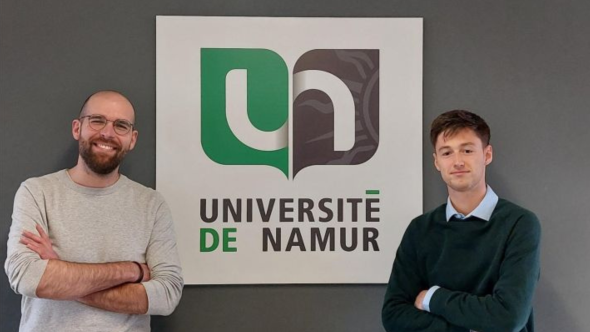
Photo d'Anthony Simonofski et Malik Schinckus

Process management is a key concept in business. By analyzing and monitoring how processes are carried out, a company can track its operational performance and identify opportunities for improvement. However, for many companies, this aspect of management is still too often underdeveloped.

The unique aspect of the U-BPM research project led by Malik Schinckus and supervised by Professor Anthony Simonofski (UNamur School of Management and member of the MINDIT research center) is its specific focus on the people who execute processes on the ground—namely, the employees themselves. “Most organizations still oversee operations from a distance, collaborating with their employees only through Q&A sessions or interviews. To better understand the field and find effective solutions, it is essential to optimize collaboration between the ‘management’ and the ‘domain experts,’ that is, the people responsible for executing the processes, explains Malik Schinckus.

The goal of Malik Schinckus’s thesis is therefore to implement tools and methods that facilitate better communication between these groups and improve the flow of information, with the aim of sustainably optimizing process execution. To achieve this, generative artificial intelligence (AI) appears to be a promising avenue: “Generative AI is indeed accessible to everyone, as interactions are based on natural language, continues Malik Schinckus.

Aligning research with real-world needs

To implement a sustainable solution tailored to the realities of Belgian businesses, Malik Schinckus is collaborating with the consulting firm Daïmo, which specializes in IT and management. This immersive research provides a step back to assess the possibilities offered by AI by comparing it with real-world applications. “At present, it is impossible to automate everything and replace an analyst for complex cognitive tasks. The analyst identifies what is implicit, contextualizes the information, and judges when understanding is sufficient. AI does not yet have these capabilities, the researcher notes. 

The creation of innovative tools to solve complex problems encountered in the field is an approach known in academia as “Design Science Research.” 

Image
Anthony Simonofski

The collaboration with Daïmo fits perfectly into this paradigm by bridging the gap between research and the realities of the business world through the iterative development of a new solution that bridges theory and practice. This is extremely valuable not only for the company but also for the university.

Anthony Simonofski Professor and researcher in digital transformation

Effects are already visible

The benefits of this methodology are already evident: reduced costs, improved service quality, and greater flexibility.

Even though it’s not perfect, it’s clear that the tool is already delivering tangible benefits. Generative AI acts as a bridge between different levels, transforming ideas into actionable data for other roles. If this bridge helps spark reflection on day-to-day practices, then the tool provides real value by improving collaboration and understanding across departments.

Malik Schinckus Ph.D. student at the UNamur School of Management (EMCP Faculty)

Ultimately, the data from this research will help refine this solution and, eventually, enable its deployment on a larger scale.

Watch the video about the project

Win4doc

Win4Doc is a program established by Wallonia (SPW Research) that enables a Walloon company to hire a researcher to conduct doctoral research in collaboration with a university research unit.

Logo Wallonie

Industrial PhD Programs at UNamur

Is creativity an essential skill for the future? New programs are being added to the curriculum starting this fall!

Management
Communication

Experts highlight creativity as an essential skill for tomorrow’s decision-makers in an era of widespread AI adoption. At the same time, the cultural and creative industries represent a rapidly growing sector. To keep pace with these developments, two new tracks will be introduced into the Information and Communication and Management Engineering programs starting next fall. Focus on the expected changes in the Faculty of Economics, Management, Communication, and Political Science (EMCP).
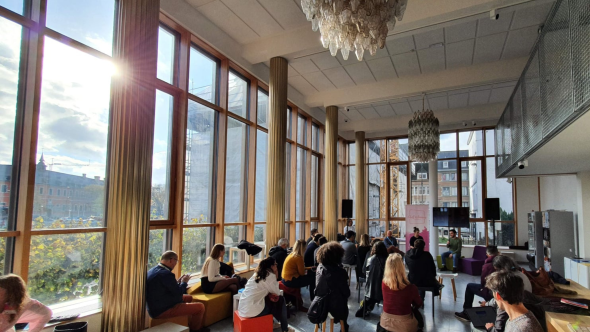
Public assistant à une conférence

Starting in their bachelor’s program, students in the Management and Information and Communication Engineering track have the opportunity to tailor their degree to a specialization rooted in market needs. This is a unique feature of the Namur program that allows students to remain versatile while avoiding the pitfall of overly specialized profiles. “It’s really a matter of adding a specific focus to the bachelor’s degree, which remains the same regardless of the track chosen, explain Anthony Simonofski and Fanny Barnabé, professors and directors of the bachelor’s programs in Management Engineering and Information and Communication, respectively.

In this context, two new tracks will be added to these two bachelor’s programs starting this fall: “Creative Technologies” in Management Engineering and “Cultural and Creative Industries” in Information and Communication.

Understanding and Experimenting with Creative Technologies

 “For the management engineering program, we’ve traditionally had two bachelor’s tracks: one in information management, focused on IT development, and one in environmental and life sciences, focused on science and sustainability, explains Anthony Simonofski. Created in collaboration with the Information and Communication program and the School of Computer Science, the “Creative Technologies” track enriches existing programs by offering students the opportunity to imagine and experiment with creative uses of technology in a responsible manner, within a context marked by numerous societal challenges

Image
Anthony Simonofski

The digital and sustainable transition presents organizations with as many challenges as it does opportunities. To innovate and develop new solutions, it is essential to cultivate creative thinking, especially in the age of generative AI. 

Anthony Simonofski Professor and Director of the Bachelor's Program in Management Engineering

What can students expect from the courses? “Some will focus on new uses of technology, understanding the digital and sustainable transitions, and new creative technologies, such as generative AI, immersive technologies (XR), and video game technologies, among others, says Anthony Simonofski.

Building connections with Namur’s creative community

As for the Bachelor’s degree in Information and Communication, the plan is to revamp the existing “Culture and Audiovisual” track, which will be renamed “Cultural and Creative Industries” starting this fall. “Alongside the more traditional tracks of ‘Journalism and News Media’ and ‘Organizational Communication,’ this overhaul aims to forge stronger ties with the cultural and creative industries (CCI) sector, which is a highly dynamic sector currently undergoing restructuring. Furthermore, the Namur ecosystem is highly stimulating, featuring events such as the KIKK festival or the FIFF, networks of stakeholders like wake!, and institutions dedicated to popularizing or mediating science and culture such as the Pavillon, the Confluent des savoirs, the Medialab, and others, explains Fanny Barnabé. 

Image
Barnabé_Fanny

A unique opportunity for students to gain hands-on experience in the cultural and creative sectors during their studies, before entering the workforce.

Fanny Barnabé Professor and Director of the Bachelor's Program in Information and Communication

While the two programs differ in terms of student profiles and career opportunities, joint courses will be offered to help students integrate into this ecosystem and explore management issues in the creative industries.

UNamur at the heart of digital creativity in Wallonia

The collaboration between UNamur and the cultural and creative industries sector is particularly evident through the wake! by Digital Wallonia label, which aims to bring together Walloon players in the field of digital creativity from a variety of sectors: universities, research centers, creative hubs, festivals, companies, artists, investment funds, and more. UNamur was quickly among the first to contribute to this momentum.

These new programs will also facilitate communication between the cultural industries and future professionals: “The need for academic research and training aligned with the needs of the digital creative industries sector is paramount, explains Delphine Jenart, wake! coordinator for KIKK. “We do indeed need a new generation of experts at the intersection of communication and creative technologies who understand the sector’s challenges regarding innovation and creativity and can formulate strategies.” 

These connections can take the form of guest lectures by professionals in the classroom, as well as internship opportunities or thesis projects.

Learn more about studying at the Faculty of Economics, Management, and Communication (EMCP) at Sciences Po

EMCP Faculty: three researchers win awards - #3 When AI becomes more human: Florence Nizette (NaDI) wins an international award

Award

This summer's third and final focus on the NaDI-CeRCLe research center, which has gained international recognition in recent weeks thanks to awards won by three young researchers in service management. Following on from Floriane Goosse and Victor Sluÿters, we invite you to discover the work of Florence Nizette, a young researcher working on Artificial Intelligence technologies.
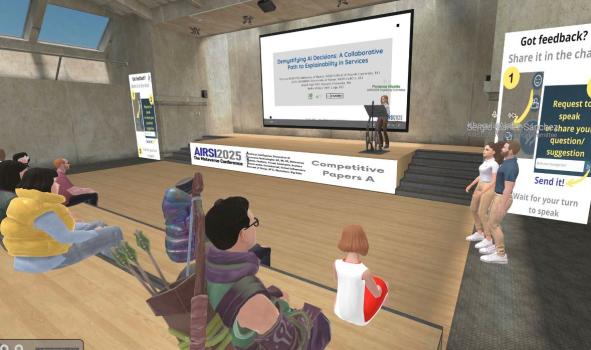
florence-nizette-emcp

It was at an international, multidisciplinary conference organized by the University of Zaragoza (Spain), AIRSI 2025, which brings together over 200 researchers around 4.0 technologies (artificial intelligence, robotics, virtual assistants, avatars, metavers, augmented reality, big data, etc.), that Florence Nizette brilliantly received the Best Paper Award for an article from her thesis in artificial intelligence.

.

More transparent and trustworthy AI services

In her thesis, Florence Nizette looks at user confidence in AI technologies, and in particular at the notion of their "explainability" (XAI). An essential aspect in making these tools more understandable, at a time when their use is only increasing in many sectors.

The originality of Florence Nizette's work lies in the deployment of a multi-stakeholder perspective, an aspect as yet little studied in the literature yet crucial to fostering the adoption of these tools. "I interviewed various actors in sensitive sectors such as finance or insurance, where trust is key: company executives, managers, experts, developers and users with the aim of gaining a global view of how to improve the explicability of AI services. My work consisted in identifying the expectations and constraints encountered by each of the stakeholders with the aim of building bridges between these different actors and seeing how they can collaborate to improve AI-enabled services."

By reconceptualizing explicability as a human-centric challenge, Florence Nizette's study provides theoretical and practical keys to developing more transparent and trustworthy AI systems, aligned with business needs and compliant with regulations.

Research conducted at UNamur and Hasselt University

For this project - based on interviews conducted internationally with XAI players and stakeholders - Florence Nizette benefits from the guidance of its promoters, Professors Wafa Hammedi (UNamur), Allard Van Riel (Hasselt University) and Nadia Steils (HEC Liège). Indeed, the researcher has the particularity of conducting her research at both UNamur and Hasselt University. An advantage in her view: "It's very enriching, both from an intellectual point of view and in terms of access to resources and networks in both regions", explains Florence Nizette.

A career guided by rigor, curiosity and a taste for exchange

Beyond the scientific aspect, Florence emphasizes the human richness of her career. As part of the dynamic team at the NaDI-CeRCLe research center, she emphasizes the mutual support and collaboration that prevail within her group, while also having the opportunity to exchange with different teams at other universities and internationally. The guidance of her three promoters, each bringing a singular perspective to her work, has been invaluable support throughout.

According to Florence, the singularity of her career path lies in this openness: learning and progressing by helping others and receiving their advice, finding enrichment in the diversity of collaborations and points of view. "What stimulates me in a PhD is scientific discovery as much as human interaction: the discussions, the collaborations, the diversity of perspectives", she explains. An experience that is both formative and deeply human, illustrating the power of networking, sharing and international openness.

Florence has benefited from the academic anchorage offered by a community of researchers in service, both nationally and internationally. The scientific rigor, methodological rigor and quality of exchanges that characterize this community represent an invaluable opportunity for any young researcher. This environment has nurtured his scientific maturity and enabled him to raise his work to a higher level.

The research center, with its stimulating yet caring atmosphere, provides fertile ground for academic development. Added to this is the participation in or organization of events of international stature, such as Let's Talk About Service (LTAS), the benchmark conference by the American Marketing Association, held in 2023 in Namur, as well as seminars regularly hosting renowned researchers. These experiences have not only enabled her to integrate the highest standards of the discipline, but also to challenge herself in order to develop and refine her skills as a researcher.

.
prix-florence-nizette
Image
Florence Nizette

A PhD is more than research; it is a journey of growth, curiosity, and resilience. Every challenge faced is an opportunity to learn and every discovery is a step toward making a meaningful impact.

Florence Nizette Doctoral student at UNamur

EMCP Faculty: three award-winning researchers - #2 Victor Sluÿters, the doctoral student who deciphers employee behavior in crisis situations

Award
Institution

A flurry of awards for the NaDI-CeRCLe research center in recent weeks. The service management research of three young doctoral students from the EMCP Faculty has been recognized by their peers at leading international scientific events: Floriane Goosse, Victor Sluÿters and Florence Nizette. This summer, we invite you to discover their careers and their work.
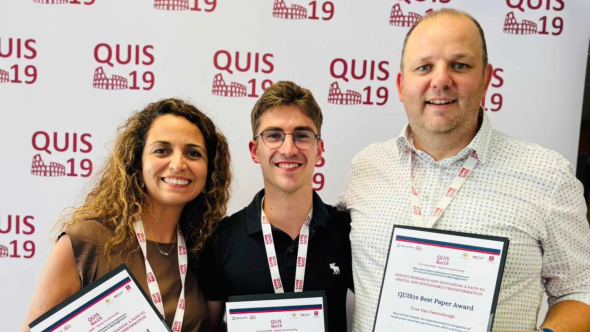
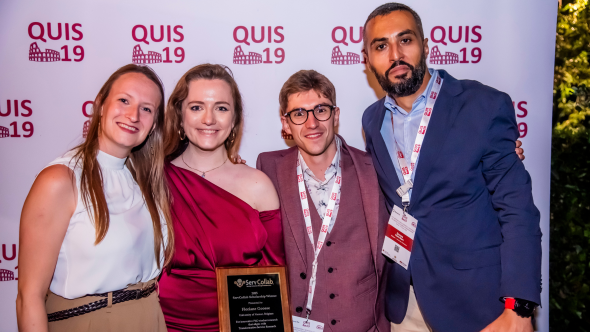
Victor Sluyters à la conférence QUIS

In early June, the 19th International Research Symposium on Service Excellence in Management (QUIS19) was held in Rome, one of the most important conferences in the field of service management. An enriching experience in more ways than one for Victor Sluÿters, a PhD student at the NaDI-CeRCLe research center, who was awarded the "Best Paper Award" by an international jury from over 350 papers.

"Typically, the award is given to a presentation that fits in with the conference theme, which this year focused on digital and sustainable transformation.Although my research project is currently attracting quite a bit of attention, it deviated quite a bit from this theme. So I didn't expect to win an award," confides Victor Sluÿters.

An original approach to crisis management

The thesis paper by Victor Sluÿters - whose work is supervised by Professors Wafa Hammedi (UNamur), Yves Van Vaerenbergh (KU Leuven) and Thomas Leclercq (IÉSEG School of Management) - focuses on data breaches (or data breach) and their management by companies. These are well-known threats feared by organizations for their potentially severe and far-reaching consequences.

Victor Sluÿters focuses more specifically on the psychological mechanisms of shame that underpin employee behavior in a crisis context. This emotion has strong and lasting effects on employee commitment, performance and well-being. Companies therefore have a vested interest in understanding the behavioral mechanisms at work to better cope with this type of event. It was this in-depth psychological dimension of crisis management, still relatively unexplored in the literature, that convinced the QUIS jury.

A human adventure above all

Beyond the scientific recognition, Victor Sluÿters insists on the human aspect of his research work. "We started our thesis at the same time as Floriane [Goosse] and Florence [Nizette]. We really help each other out. We organized very critical proofreading sessions, sometimes tough, but always benevolent.""What's more, we're lucky enough to benefit from excellent support from our promoter, Professor Wafa Hammedi, from both a research and human point of view. And for my part, I can also count on the invaluable insight and support of my two other co-promoters, Yves Van Vaerenbergh and Thomas Leclercq, who contribute enormously to enriching this adventure.", continues the young researcher.

Image
Photo de Victor Sluyters

Through the doctoral path, you grow as a person and I'm extremely grateful for everything they offer me on a daily basis as well as for the positive atmosphere I'm lucky enough to evolve in.

Victor Sluÿters Doctoral student at NaDI-CeRCLe

Zoom: Research in service management

Service management is a field of research concerned with the methods, practices and tools used to design, produce and evaluate the performance of a service activity. NaDI-CeRCLe is one of the leading players in this particular field of research.

AI as a driver of autonomy in the workplace

Management
Artificial Intelligences (AI)

The U-BPM (User-oriented Business Process Management) project explores how artificial intelligence can serve as a bridge between different business functions within a company. This process-management-focused approach is led by Malik Schinckus as part of the Win4doc program, a doctoral thesis funded by SPW Research. In collaboration with UNamur and the consulting firm Daïmo, Malik Schinckus brings theory and practice together to improve collaboration, performance, and reflection on everyday practices in the business world. 

Photo d'Anthony Simonofski et Malik Schinckus

Process management is a key concept in business. By analyzing and monitoring how processes are carried out, a company can track its operational performance and identify opportunities for improvement. However, for many companies, this aspect of management is still too often underdeveloped.

The unique aspect of the U-BPM research project led by Malik Schinckus and supervised by Professor Anthony Simonofski (UNamur School of Management and member of the MINDIT research center) is its specific focus on the people who execute processes on the ground—namely, the employees themselves. “Most organizations still oversee operations from a distance, collaborating with their employees only through Q&A sessions or interviews. To better understand the field and find effective solutions, it is essential to optimize collaboration between the ‘management’ and the ‘domain experts,’ that is, the people responsible for executing the processes, explains Malik Schinckus.

The goal of Malik Schinckus’s thesis is therefore to implement tools and methods that facilitate better communication between these groups and improve the flow of information, with the aim of sustainably optimizing process execution. To achieve this, generative artificial intelligence (AI) appears to be a promising avenue: “Generative AI is indeed accessible to everyone, as interactions are based on natural language, continues Malik Schinckus.

Aligning research with real-world needs

To implement a sustainable solution tailored to the realities of Belgian businesses, Malik Schinckus is collaborating with the consulting firm Daïmo, which specializes in IT and management. This immersive research provides a step back to assess the possibilities offered by AI by comparing it with real-world applications. “At present, it is impossible to automate everything and replace an analyst for complex cognitive tasks. The analyst identifies what is implicit, contextualizes the information, and judges when understanding is sufficient. AI does not yet have these capabilities, the researcher notes. 

The creation of innovative tools to solve complex problems encountered in the field is an approach known in academia as “Design Science Research.” 

Image
Anthony Simonofski

The collaboration with Daïmo fits perfectly into this paradigm by bridging the gap between research and the realities of the business world through the iterative development of a new solution that bridges theory and practice. This is extremely valuable not only for the company but also for the university.

Anthony Simonofski Professor and researcher in digital transformation

Effects are already visible

The benefits of this methodology are already evident: reduced costs, improved service quality, and greater flexibility.

Even though it’s not perfect, it’s clear that the tool is already delivering tangible benefits. Generative AI acts as a bridge between different levels, transforming ideas into actionable data for other roles. If this bridge helps spark reflection on day-to-day practices, then the tool provides real value by improving collaboration and understanding across departments.

Malik Schinckus Ph.D. student at the UNamur School of Management (EMCP Faculty)

Ultimately, the data from this research will help refine this solution and, eventually, enable its deployment on a larger scale.

Watch the video about the project

Win4doc

Win4Doc is a program established by Wallonia (SPW Research) that enables a Walloon company to hire a researcher to conduct doctoral research in collaboration with a university research unit.

Logo Wallonie

Industrial PhD Programs at UNamur

Is creativity an essential skill for the future? New programs are being added to the curriculum starting this fall!

Management
Communication

Experts highlight creativity as an essential skill for tomorrow’s decision-makers in an era of widespread AI adoption. At the same time, the cultural and creative industries represent a rapidly growing sector. To keep pace with these developments, two new tracks will be introduced into the Information and Communication and Management Engineering programs starting next fall. Focus on the expected changes in the Faculty of Economics, Management, Communication, and Political Science (EMCP).

Public assistant à une conférence

Starting in their bachelor’s program, students in the Management and Information and Communication Engineering track have the opportunity to tailor their degree to a specialization rooted in market needs. This is a unique feature of the Namur program that allows students to remain versatile while avoiding the pitfall of overly specialized profiles. “It’s really a matter of adding a specific focus to the bachelor’s degree, which remains the same regardless of the track chosen, explain Anthony Simonofski and Fanny Barnabé, professors and directors of the bachelor’s programs in Management Engineering and Information and Communication, respectively.

In this context, two new tracks will be added to these two bachelor’s programs starting this fall: “Creative Technologies” in Management Engineering and “Cultural and Creative Industries” in Information and Communication.

Understanding and Experimenting with Creative Technologies

 “For the management engineering program, we’ve traditionally had two bachelor’s tracks: one in information management, focused on IT development, and one in environmental and life sciences, focused on science and sustainability, explains Anthony Simonofski. Created in collaboration with the Information and Communication program and the School of Computer Science, the “Creative Technologies” track enriches existing programs by offering students the opportunity to imagine and experiment with creative uses of technology in a responsible manner, within a context marked by numerous societal challenges

Image
Anthony Simonofski

The digital and sustainable transition presents organizations with as many challenges as it does opportunities. To innovate and develop new solutions, it is essential to cultivate creative thinking, especially in the age of generative AI. 

Anthony Simonofski Professor and Director of the Bachelor's Program in Management Engineering

What can students expect from the courses? “Some will focus on new uses of technology, understanding the digital and sustainable transitions, and new creative technologies, such as generative AI, immersive technologies (XR), and video game technologies, among others, says Anthony Simonofski.

Building connections with Namur’s creative community

As for the Bachelor’s degree in Information and Communication, the plan is to revamp the existing “Culture and Audiovisual” track, which will be renamed “Cultural and Creative Industries” starting this fall. “Alongside the more traditional tracks of ‘Journalism and News Media’ and ‘Organizational Communication,’ this overhaul aims to forge stronger ties with the cultural and creative industries (CCI) sector, which is a highly dynamic sector currently undergoing restructuring. Furthermore, the Namur ecosystem is highly stimulating, featuring events such as the KIKK festival or the FIFF, networks of stakeholders like wake!, and institutions dedicated to popularizing or mediating science and culture such as the Pavillon, the Confluent des savoirs, the Medialab, and others, explains Fanny Barnabé. 

Image
Barnabé_Fanny

A unique opportunity for students to gain hands-on experience in the cultural and creative sectors during their studies, before entering the workforce.

Fanny Barnabé Professor and Director of the Bachelor's Program in Information and Communication

While the two programs differ in terms of student profiles and career opportunities, joint courses will be offered to help students integrate into this ecosystem and explore management issues in the creative industries.

UNamur at the heart of digital creativity in Wallonia

The collaboration between UNamur and the cultural and creative industries sector is particularly evident through the wake! by Digital Wallonia label, which aims to bring together Walloon players in the field of digital creativity from a variety of sectors: universities, research centers, creative hubs, festivals, companies, artists, investment funds, and more. UNamur was quickly among the first to contribute to this momentum.

These new programs will also facilitate communication between the cultural industries and future professionals: “The need for academic research and training aligned with the needs of the digital creative industries sector is paramount, explains Delphine Jenart, wake! coordinator for KIKK. “We do indeed need a new generation of experts at the intersection of communication and creative technologies who understand the sector’s challenges regarding innovation and creativity and can formulate strategies.” 

These connections can take the form of guest lectures by professionals in the classroom, as well as internship opportunities or thesis projects.

Learn more about studying at the Faculty of Economics, Management, and Communication (EMCP) at Sciences Po

EMCP Faculty: three researchers win awards - #3 When AI becomes more human: Florence Nizette (NaDI) wins an international award

Award

This summer's third and final focus on the NaDI-CeRCLe research center, which has gained international recognition in recent weeks thanks to awards won by three young researchers in service management. Following on from Floriane Goosse and Victor Sluÿters, we invite you to discover the work of Florence Nizette, a young researcher working on Artificial Intelligence technologies.

florence-nizette-emcp

It was at an international, multidisciplinary conference organized by the University of Zaragoza (Spain), AIRSI 2025, which brings together over 200 researchers around 4.0 technologies (artificial intelligence, robotics, virtual assistants, avatars, metavers, augmented reality, big data, etc.), that Florence Nizette brilliantly received the Best Paper Award for an article from her thesis in artificial intelligence.

.

More transparent and trustworthy AI services

In her thesis, Florence Nizette looks at user confidence in AI technologies, and in particular at the notion of their "explainability" (XAI). An essential aspect in making these tools more understandable, at a time when their use is only increasing in many sectors.

The originality of Florence Nizette's work lies in the deployment of a multi-stakeholder perspective, an aspect as yet little studied in the literature yet crucial to fostering the adoption of these tools. "I interviewed various actors in sensitive sectors such as finance or insurance, where trust is key: company executives, managers, experts, developers and users with the aim of gaining a global view of how to improve the explicability of AI services. My work consisted in identifying the expectations and constraints encountered by each of the stakeholders with the aim of building bridges between these different actors and seeing how they can collaborate to improve AI-enabled services."

By reconceptualizing explicability as a human-centric challenge, Florence Nizette's study provides theoretical and practical keys to developing more transparent and trustworthy AI systems, aligned with business needs and compliant with regulations.

Research conducted at UNamur and Hasselt University

For this project - based on interviews conducted internationally with XAI players and stakeholders - Florence Nizette benefits from the guidance of its promoters, Professors Wafa Hammedi (UNamur), Allard Van Riel (Hasselt University) and Nadia Steils (HEC Liège). Indeed, the researcher has the particularity of conducting her research at both UNamur and Hasselt University. An advantage in her view: "It's very enriching, both from an intellectual point of view and in terms of access to resources and networks in both regions", explains Florence Nizette.

A career guided by rigor, curiosity and a taste for exchange

Beyond the scientific aspect, Florence emphasizes the human richness of her career. As part of the dynamic team at the NaDI-CeRCLe research center, she emphasizes the mutual support and collaboration that prevail within her group, while also having the opportunity to exchange with different teams at other universities and internationally. The guidance of her three promoters, each bringing a singular perspective to her work, has been invaluable support throughout.

According to Florence, the singularity of her career path lies in this openness: learning and progressing by helping others and receiving their advice, finding enrichment in the diversity of collaborations and points of view. "What stimulates me in a PhD is scientific discovery as much as human interaction: the discussions, the collaborations, the diversity of perspectives", she explains. An experience that is both formative and deeply human, illustrating the power of networking, sharing and international openness.

Florence has benefited from the academic anchorage offered by a community of researchers in service, both nationally and internationally. The scientific rigor, methodological rigor and quality of exchanges that characterize this community represent an invaluable opportunity for any young researcher. This environment has nurtured his scientific maturity and enabled him to raise his work to a higher level.

The research center, with its stimulating yet caring atmosphere, provides fertile ground for academic development. Added to this is the participation in or organization of events of international stature, such as Let's Talk About Service (LTAS), the benchmark conference by the American Marketing Association, held in 2023 in Namur, as well as seminars regularly hosting renowned researchers. These experiences have not only enabled her to integrate the highest standards of the discipline, but also to challenge herself in order to develop and refine her skills as a researcher.

.
prix-florence-nizette
Image
Florence Nizette

A PhD is more than research; it is a journey of growth, curiosity, and resilience. Every challenge faced is an opportunity to learn and every discovery is a step toward making a meaningful impact.

Florence Nizette Doctoral student at UNamur

EMCP Faculty: three award-winning researchers - #2 Victor Sluÿters, the doctoral student who deciphers employee behavior in crisis situations

Award
Institution

A flurry of awards for the NaDI-CeRCLe research center in recent weeks. The service management research of three young doctoral students from the EMCP Faculty has been recognized by their peers at leading international scientific events: Floriane Goosse, Victor Sluÿters and Florence Nizette. This summer, we invite you to discover their careers and their work.

Victor Sluyters à la conférence QUIS

In early June, the 19th International Research Symposium on Service Excellence in Management (QUIS19) was held in Rome, one of the most important conferences in the field of service management. An enriching experience in more ways than one for Victor Sluÿters, a PhD student at the NaDI-CeRCLe research center, who was awarded the "Best Paper Award" by an international jury from over 350 papers.

"Typically, the award is given to a presentation that fits in with the conference theme, which this year focused on digital and sustainable transformation.Although my research project is currently attracting quite a bit of attention, it deviated quite a bit from this theme. So I didn't expect to win an award," confides Victor Sluÿters.

An original approach to crisis management

The thesis paper by Victor Sluÿters - whose work is supervised by Professors Wafa Hammedi (UNamur), Yves Van Vaerenbergh (KU Leuven) and Thomas Leclercq (IÉSEG School of Management) - focuses on data breaches (or data breach) and their management by companies. These are well-known threats feared by organizations for their potentially severe and far-reaching consequences.

Victor Sluÿters focuses more specifically on the psychological mechanisms of shame that underpin employee behavior in a crisis context. This emotion has strong and lasting effects on employee commitment, performance and well-being. Companies therefore have a vested interest in understanding the behavioral mechanisms at work to better cope with this type of event. It was this in-depth psychological dimension of crisis management, still relatively unexplored in the literature, that convinced the QUIS jury.

A human adventure above all

Beyond the scientific recognition, Victor Sluÿters insists on the human aspect of his research work. "We started our thesis at the same time as Floriane [Goosse] and Florence [Nizette]. We really help each other out. We organized very critical proofreading sessions, sometimes tough, but always benevolent.""What's more, we're lucky enough to benefit from excellent support from our promoter, Professor Wafa Hammedi, from both a research and human point of view. And for my part, I can also count on the invaluable insight and support of my two other co-promoters, Yves Van Vaerenbergh and Thomas Leclercq, who contribute enormously to enriching this adventure.", continues the young researcher.

Image
Photo de Victor Sluyters

Through the doctoral path, you grow as a person and I'm extremely grateful for everything they offer me on a daily basis as well as for the positive atmosphere I'm lucky enough to evolve in.

Victor Sluÿters Doctoral student at NaDI-CeRCLe

Zoom: Research in service management

Service management is a field of research concerned with the methods, practices and tools used to design, produce and evaluate the performance of a service activity. NaDI-CeRCLe is one of the leading players in this particular field of research.

All news

Agenda

27
2026

Public defense of doctoral thesis in economics and management - Simon DECHAMPS

Thesis defense

Jury

Promoters

  • Prof. Anthony Simonofski - University of Namur
  • Prof. Corentin Burnay - University of Namur

Other members of the jury

  • Prof. Annick Castiaux - University of Namur
  • Prof. Lieselot Daneels - Ghent University
  • Prof. Ida Lindgren - Linköping University
  • Prof. Benoît Vanderose - University of Namur

Chair of the jury

  • Prof. Sophie Béreau - University of Namur
All events

Administration

Bénédicte Coulon

Department and program secretariat in management engineering

Valérie Warrand

Management Science Department and Programs Secretariat

Katty Catinus

Department and bridging student secretariat